


What's Happening?
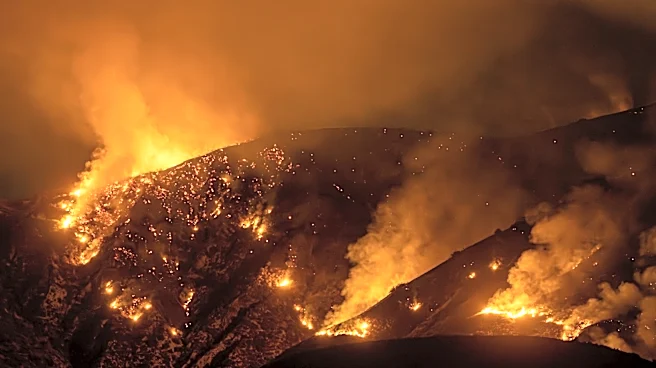
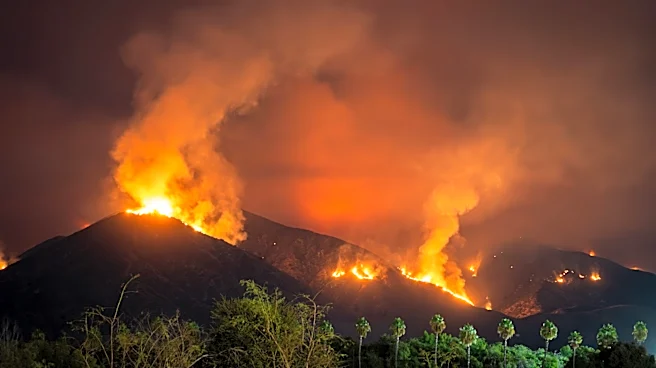
The Plaskett Fire in Big Sur, California, has rapidly expanded to nearly 27,000 acres in less than a week, becoming the largest active blaze in the state. As of Monday night, the fire had scorched 26,734 acres and was only 1% contained, marking a significant
increase from the 15,479 acres reported earlier that day. The fire, which started near Forest Road 23S10, east of Los Burros Road, has shown 'continued aggressive growth,' primarily along its eastern edge, pushing deeper into Fort Hunter Ligget. This blaze has now surpassed the nearby Timber Fire, which has burned 25,190 acres. The area has not experienced a major wildfire in over 50 years, resulting in thick vegetation that fuels the inferno across steep and rugged terrain. Nearly 1,000 firefighters and support personnel, along with numerous engines, water tenders, helicopters, and bulldozers, are battling the blaze.
Why It's Important?
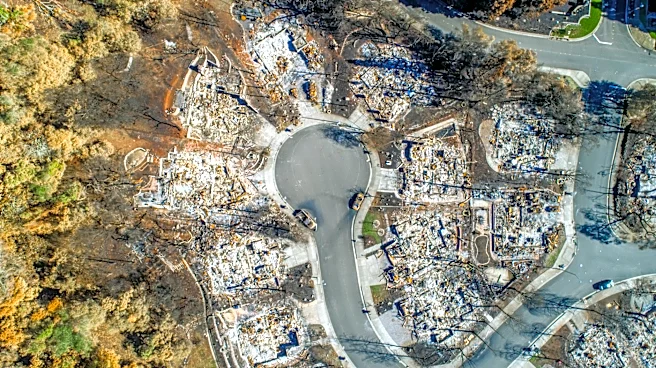
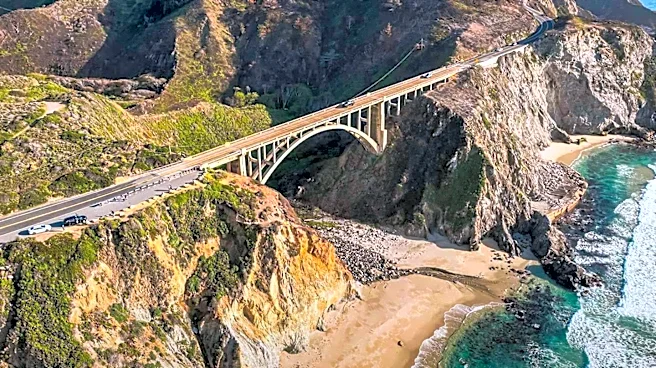
The rapid expansion and low containment of the Plaskett Fire pose a significant threat to the environment, infrastructure, and communities in Big Sur and surrounding areas. The closure of approximately 56 miles of Highway 1 severely impacts transportation, tourism, and local economies, which rely heavily on this scenic route. The fire's aggressive growth in an area with dense, unburned vegetation highlights the increasing challenge of wildfire management in California, exacerbated by long-term climate patterns. The deployment of nearly 1,000 personnel and extensive equipment underscores the immense resources required to combat such large-scale blazes, straining state and federal emergency services. The ongoing evacuations and warnings in Monterey and San Luis Obispo counties disrupt thousands of lives, causing displacement and potential property loss, and emphasizing the vulnerability of communities to natural disasters.
What's Next?
Fire officials express 'ongoing concern' that the Plaskett Fire could continue spreading south, necessitating continued efforts to protect buildings and establish new containment lines. Firefighters will persist in their strategies, including strategic burns along the northern edge and aerial attacks on the southern flank, to control the blaze. Evacuation orders and warnings will remain in effect for affected zones, and residents will need to stay informed about changing conditions. The closure of Highway 1 will likely continue indefinitely, impacting travel and local businesses. The cause of the fire remains under investigation, and its determination could influence future fire prevention policies. The long-term recovery efforts for the affected areas, including ecological restoration and infrastructure repair, will be substantial and prolonged.
Beyond the Headlines
The Plaskett Fire is more than an isolated incident; it is a stark illustration of the escalating wildfire crisis in California, driven by climate change and historical land management practices. The lack of major fires in the area for over 50 years led to an accumulation of fuel, creating conditions for an exceptionally intense and destructive blaze. This event highlights the critical need for proactive forest management, including controlled burns and vegetation thinning, to mitigate future risks. The economic impact extends beyond immediate property damage, affecting tourism, local businesses, and the psychological well-being of residents. Environmentally, the fire causes significant habitat destruction, air pollution, and long-term ecological shifts. The ongoing battle against such fires underscores the urgent need for comprehensive climate adaptation strategies and increased investment in wildfire prevention and response capabilities across the U.S. West.