







What's Happening?
Scientists are increasingly recognizing light pollution as a public health issue, with neuroscientists beginning to understand its impact on mental health. A significant portion of the population in the United States and Europe lives under skies too bright
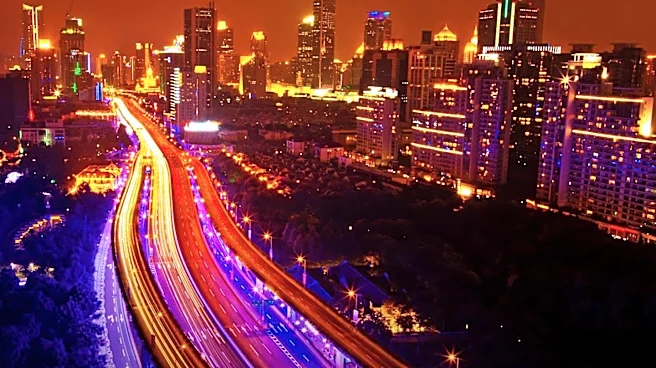
to experience true darkness, a condition that researchers are now treating as a measurable variable in mental well-being. A 2016 atlas of the world's artificial night sky brightness revealed that 99% of people in the U.S. and Europe reside in areas where the night sky is permanently illuminated. This pervasive light has led to a situation where approximately four out of five people in North America can no longer see the Milky Way from their homes. Research, such as a study led by Diana Paksarian at the National Institute of Mental Health, has identified a meaningful link between outdoor artificial light at night and sleep and mental health patterns in American adolescents. This suggests that the physical environment, specifically light exposure, plays a role in mental health outcomes, moving beyond individual habits and choices.
Why It's Important?
The recognition of light pollution as a public health concern signifies a shift in how environmental factors are understood to influence human well-being. This issue extends beyond aesthetic considerations for astronomers, impacting the physiological and psychological health of millions. The disruption of natural dark-light cycles, which human bodies are biologically designed to navigate, can have profound effects on sleep patterns, circadian rhythms, and overall mental stability. As Professor Richard Stevens of the University of Connecticut states, excessive electric lighting is detrimental to well-being, comparable to concerns about diet or air quality. This perspective elevates light pollution from an environmental nuisance to a critical public health challenge that requires attention from policymakers, urban planners, and public health officials. Addressing this issue could lead to improvements in public health, particularly in urban and suburban areas where light pollution is most prevalent.
What's Next?
Further research is anticipated to delve deeper into the specific mechanisms by which light pollution affects human physiology and mental health. This may include studies on hormonal regulation, sleep architecture, and neurological impacts. Policymakers and urban planners may begin to consider 'dark sky' initiatives and regulations for outdoor lighting more seriously, aiming to reduce light trespass and skyglow. This could involve implementing stricter standards for light fixture design, intensity, and color temperature in urban and suburban developments. Public awareness campaigns may also emerge to educate communities about the health implications of light pollution and promote practices that minimize its effects. The integration of light pollution considerations into broader environmental health frameworks is also a likely next step, fostering a more holistic approach to public health and urban planning.
Beyond the Headlines
The pervasive loss of natural darkness due to light pollution represents a significant disconnect between modern human environments and our evolutionary heritage. For millennia, human physiology and psychology have been attuned to the natural cycles of day and night. The constant presence of artificial light at night can be seen as a form of chronic environmental stress, subtly altering our biological rhythms and potentially contributing to a range of health issues beyond just mental well-being. This issue also touches upon the concept of 'environmental justice,' as access to natural dark skies may become a privilege, with lower-income communities often experiencing higher levels of light pollution due to urban density and infrastructure. The re-evaluation of urban lighting practices could lead to more sustainable and health-conscious city designs, fostering environments that support both human flourishing and ecological balance. It also prompts a broader reflection on the trade-offs between technological advancement and natural environmental quality.