


What's Happening?
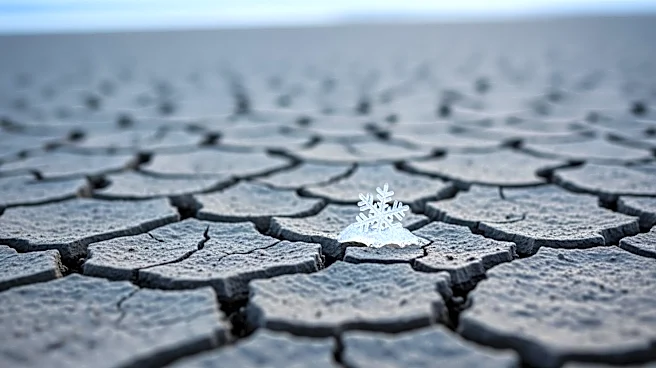
California water managers are grappling with a significant challenge as the Department of Water Resources (DWR) reported no measurable snow during its April survey at Phillips Station. This finding confirms that the Sierra Nevada snowpack has been severely
diminished due to record March heat and high-elevation rain, leaving it at just 18% of its average. This marks the second-lowest April reading ever recorded at this site. The snowpack, which acts as a natural reservoir, is crucial for supplying about one-third of California's water needs. The early melt, accelerated by a March heatwave, has raised concerns about water shortages and increased wildfire risks as the state enters its dry season. DWR Director Karla Nemeth emphasized the need for retrofitting aging water systems to handle more volatile precipitation patterns.
Why It's Important?
The drastic reduction in the Sierra Nevada snowpack has significant implications for California's water supply and environmental stability. The snowpack is a critical source of water for households, agriculture, and ecosystems, and its depletion could lead to severe water shortages during the dry season. This situation also heightens the risk of wildfires, as the state relies on snowmelt to sustain water supplies through the summer. The current conditions underscore the urgent need for California to adapt its water management strategies to cope with changing climate patterns, including investing in infrastructure to capture and store water more efficiently.
What's Next?
California officials are likely to focus on enhancing water storage and management systems to mitigate the impact of reduced snowpack. This may involve expanding reservoir capacities, improving groundwater storage, and implementing conservation measures. The state will also need to monitor weather patterns closely to prepare for potential drought conditions if the next winter is similarly dry. Stakeholders, including water managers and policymakers, will need to collaborate on long-term solutions to ensure a stable water supply in the face of climate change.