





What's Happening?
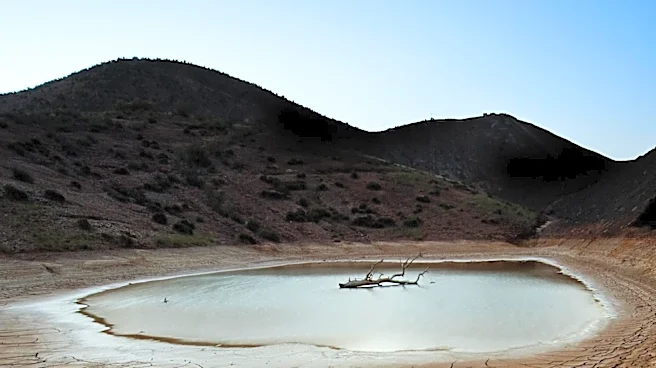
Kabul, Afghanistan, is on the brink of a severe water crisis, with its aquifers depleting at nearly double the rate they are refilling, and almost half of its boreholes already dry. Groundwater levels in the Afghan capital have fallen by 25 to 30 meters
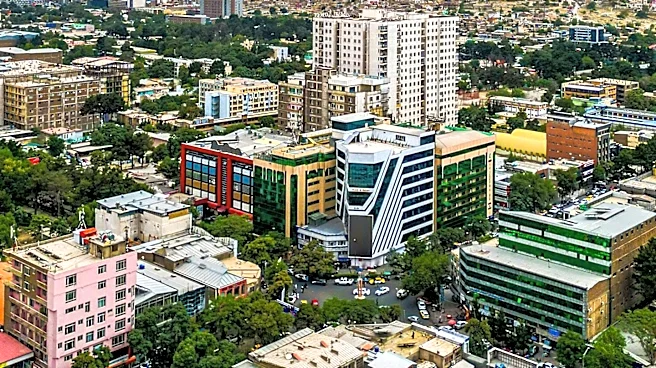
over the past decade, according to a report by Prosper Global, formerly Mercy Corps. The extraction of water exceeds natural recharge by approximately 44 million cubic meters annually. If current trends persist, the aquifers supplying most of the city could be dry by 2030, potentially displacing around 3 million of Kabul's roughly 6 million residents, as projected by UNICEF. The city's three main aquifers hold over 5 billion cubic meters of water, but only a fraction of this capacity is being maintained. Over 120,000 unregulated borewells, along with numerous factories and greenhouses, are extracting water faster than rivers can replenish it. The city's population has surged from under one million in 2001 to about six million today, intensifying the demand for water. Many households are drilling deeper wells, with some reaching 300 meters, only to find a temporary solution. The proliferation of solar-powered pumps, running continuously, further exacerbates the problem by allowing excessive water extraction. Only about 20% of Kabul households have piped water, and even they receive supply for limited hours a few days a week. The majority, 90% of residents, rely on borewells, while the rest purchase water from private tankers.
Why It's Important?
The impending water crisis in Kabul represents a critical humanitarian and environmental challenge with far-reaching implications for Afghanistan. The potential displacement of millions of residents due to water scarcity could trigger a massive internal migration crisis, straining resources in other areas and exacerbating existing vulnerabilities. The economic impact is already significant, with many families spending 15% to 30% of their monthly income on water, a substantial increase from 5% before 2021, far exceeding the UN benchmark for affordable water. This financial burden disproportionately affects the poorest households, pushing them further into debt. The contamination of up to 80% of the city's groundwater with sewage, arsenic, nitrates, and salinity poses severe public health risks, leading to widespread skin diseases, gastroenteritis, and acute respiratory infections. The inability of the national environmental agency to adequately test water quality due to lack of resources further compounds this health crisis. The decline in snowfall and glacier melt, coupled with increased paved surfaces, highlights the impact of climate change and urbanization on water resources, making the crisis a stark example of environmental degradation's human cost. The underfunding of humanitarian aid and the freezing of international water, sanitation, and hygiene funding since the Taliban's return to power have severely hampered efforts to address the crisis, underscoring the complex interplay of political instability, climate change, and humanitarian needs.
What's Next?
Addressing Kabul's water crisis requires immediate and comprehensive action. The report calls for stronger water regulation, including stricter enforcement of drilling licenses and control over solar-powered pumps, to manage extraction rates. Expanding piped water networks is crucial to provide a more reliable and centrally monitored water supply to a larger portion of the population. Improved data sharing among aid agencies and increased private sector involvement are also recommended to enhance coordination and resource allocation. The implementation and expansion of managed aquifer recharge models, such as those supported by the Asian Development Bank, could help replenish groundwater levels. However, larger projects like the Shahtoot dam and the Panjshir river pipeline face significant hurdles, including political obstacles, land rights issues, and funding gaps, which need to be overcome for long-term solutions. The international community's role in unfreezing aid and providing financial support for water, sanitation, and hygiene projects is critical. Without substantial changes in water management and sustained international assistance, Kabul faces an unprecedented humanitarian disaster within a decade, and potentially much sooner, necessitating urgent attention from global stakeholders.
Beyond the Headlines
The water crisis in Kabul extends beyond immediate humanitarian concerns, revealing deeper systemic issues related to governance, infrastructure planning, and international aid effectiveness. The report's characterization of the crisis as a "failure of governance" highlights the challenges of managing essential resources in a politically unstable environment. The loss of technical capacity at water agencies since 2021 further complicates efforts to implement sustainable solutions. The geopolitical implications are also significant, as evidenced by Pakistan's opposition to the Shahtoot dam, which it fears would reduce the flow of the Kabul River into its territory. This underscores how water resources can become a source of regional tension and conflict. The reliance on informal lenders for water-related debt, with exorbitant interest rates, exposes the vulnerability of the population and the emergence of a shadow economy around essential services. The crisis also serves as a stark reminder of the interconnectedness of climate change, urbanization, and human well-being, demonstrating how environmental shifts can rapidly destabilize urban centers and exacerbate existing social inequalities. The long-term consequences could include increased social unrest, forced migration, and a deepening humanitarian catastrophe, making the situation in Kabul a critical case study for global challenges.