






What's Happening?
North Macedonia has decided to dismantle and remove infrastructure related to two planned small hydropower plants, Pena 84 and Pena 85, in the Leshnica Valley within Sar Mountain National Park. For years, this valley has been a focal point of conflict
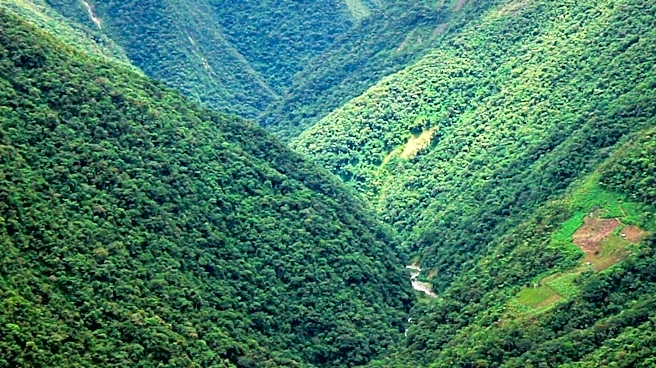
between energy development and environmental preservation efforts. Although the hydropower projects were never completed or put into operation, their installed infrastructure remained a visible reminder of the plans. The Sar Mountain National Park public institution announced that this removal is a crucial first step towards restoring the natural state of this exceptionally valuable area. The projects, developed by Gravis Hydro, were planned with capacities of 2.89 MW and 2.46 MW, respectively. The park's management plan explicitly prohibits the construction of new hydroelectric power plants in any of its three protection zones, citing the disruption of ecological processes in river ecosystems as a significant threat. The Leshnica Valley is recognized as a European biodiversity hotspot and is part of the area identified for future Natura 2000 sites and the Emerald Network.
Why It's Important?
This decision marks a significant victory for environmental conservation in North Macedonia and sets a precedent for balancing renewable energy development with ecological protection. Small hydropower plants, while promoted as green energy sources, can have substantial environmental costs in mountainous protected areas, including altered river ecosystems, fragmented landscapes, and impacts from construction. The removal of this infrastructure underscores the growing recognition of the intrinsic value of pristine natural environments, especially in biodiversity hotspots like Sar Mountain. It also highlights the importance of adhering to national park regulations and international conservation agreements, such as the Bern Convention. The case demonstrates that the long-term ecological health and integrity of protected areas can take precedence over certain energy development projects, particularly when local communities and environmental institutions advocate for preservation. This move will allow the Leshnica Valley, a popular and ecologically sensitive area, to begin healing and returning to its natural condition.
What's Next?
The current operation involves the careful dismantling and removal of the pipeline infrastructure, a process that requires particular care due to the mountainous terrain, difficult access, and ecological sensitivity of the site. The ultimate goal extends beyond mere removal; it includes the rehabilitation of the disturbed terrain to return it as close as possible to its natural state. This will involve institutional and legal procedures to finalize the status of these two projects. The Sar Mountain National Park will continue to enforce its management plan, which prohibits new hydropower plants, ensuring the long-term protection of the area. This decision may also influence future energy development projects in other protected areas within North Macedonia and potentially serve as a model for other countries grappling with similar conflicts between energy needs and environmental conservation. The focus will now shift to monitoring the ecological recovery of the Leshnica Valley and ensuring that its biodiversity and natural processes are fully restored.
Beyond the Headlines
The scrapping of these hydropower plans in Sar Mountain National Park reflects a broader global shift in environmental policy, where the true costs of 'green' energy projects are being scrutinized more closely, especially in ecologically sensitive regions. It challenges the simplistic notion that all renewable energy is inherently benign, prompting a more nuanced discussion about the environmental footprint of different energy sources. This case also highlights the power of sustained advocacy from environmental groups and local communities, whose concerns about terrain stability, potential landslides, and water supply for Tetovo played a crucial role in the institutional decision-making process. The emphasis on restoring the landscape to its natural state signifies a move beyond mere mitigation to active ecological restoration, recognizing that prevention and healing are paramount in conservation. This development could inspire similar re-evaluations of infrastructure projects in protected areas worldwide, fostering a more holistic approach to sustainable development that prioritizes ecosystem integrity.