




What's Happening?
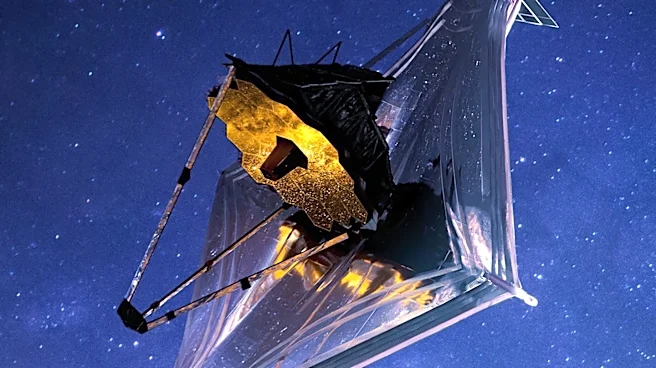
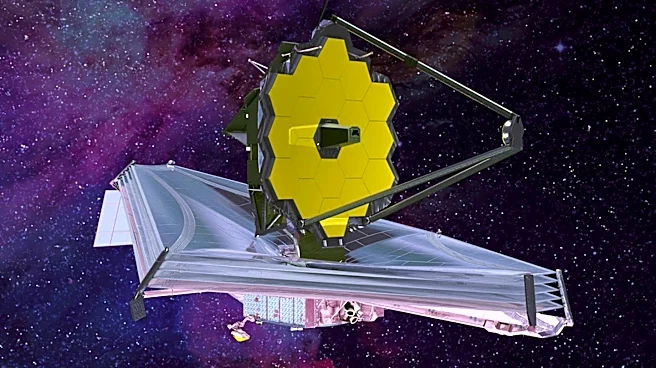
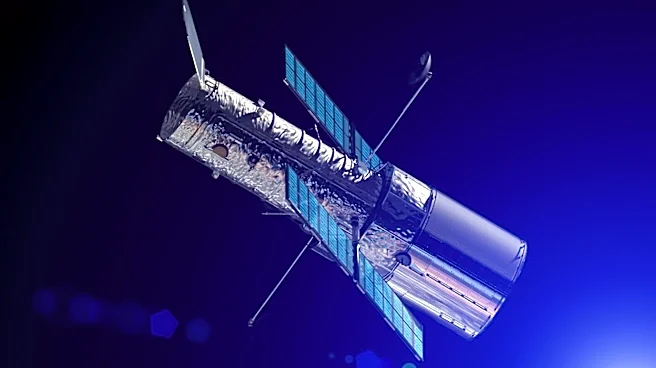
Recent observations from NASA's James Webb Space Telescope (JWST) and the European Southern Observatory's Very Large Telescope have provided new insights into the interstellar comet 3I/ATLAS. The data suggests that 3I/ATLAS is between 10 and 12 billion
years old, making it significantly older than our solar system. The comet's isotopic composition, particularly the ratios of carbon and nitrogen isotopes, indicates that it formed on the outskirts of a protoplanetary disk belonging to its parent star. This discovery offers a unique opportunity to study the conditions of planetary formation in environments vastly different from our own solar system.
Why It's Important?
The study of 3I/ATLAS provides valuable information about the early conditions of planetary formation in the galaxy. By analyzing the isotopic ratios, scientists can infer the chemical processes and environments that existed long before our solar system formed. This research enhances our understanding of the diversity of planetary systems and the potential for life beyond our solar system. The findings also highlight the capabilities of modern telescopes like the JWST in uncovering the mysteries of interstellar objects, which can serve as 'fossils' of ancient planetary systems.
What's Next?
Future studies of interstellar objects like 3I/ATLAS could further illuminate the processes of planetary formation across the galaxy. As more interstellar comets are observed, scientists will be able to compare their compositions and origins, potentially leading to new theories about the formation and evolution of planetary systems. Continued advancements in telescope technology will play a crucial role in these discoveries, offering deeper insights into the history and diversity of the universe.