


What's Happening?
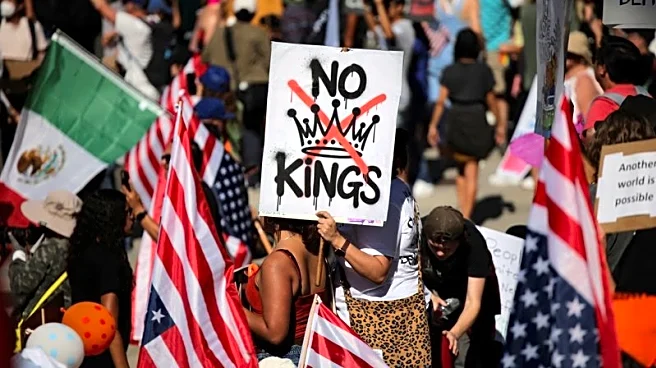
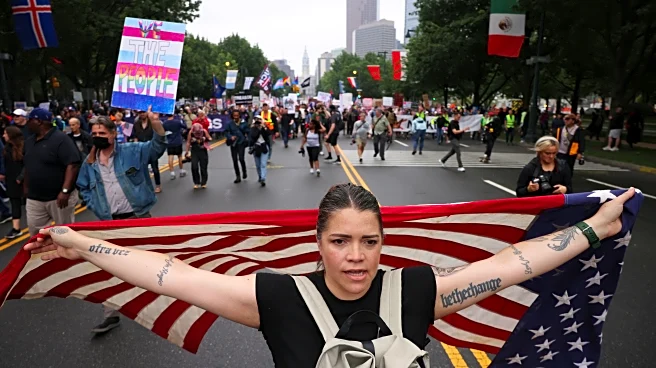
As millions prepare to participate in 'No Kings' demonstrations across the U.S. to protest against authoritarianism and President Trump's administration, concerns have been raised about the potential risks of sharing photos and videos from these events
on social media. Legal experts and digital rights advocates highlight that while individuals have the right to record in public spaces, sharing such content can inadvertently expose participants to surveillance and targeting by law enforcement and immigration authorities. Petra Molnar, a lawyer and author, notes that images and videos can reveal identifying details that may be cross-referenced with government databases, posing risks especially to immigrants without secure status. The American Civil Liberties Union emphasizes the importance of understanding one's rights while also being mindful of the potential consequences of sharing protest content online.
Why It's Important?
The issue underscores the tension between exercising free speech and the risks of digital surveillance in the current political climate. The ability to document and share protest activities is a critical aspect of democratic expression, yet it also opens up participants to potential scrutiny and retaliation, particularly under an administration perceived as hostile to dissent. This situation highlights broader concerns about privacy, data security, and the use of technology in monitoring civil activities. The implications are significant for immigrant communities and activists who may face heightened risks of detention or deportation. The discussion also reflects ongoing debates about the balance between security measures and civil liberties in the digital age.
What's Next?
Participants and organizers of the 'No Kings' protests are advised to take precautions when documenting events. This includes obtaining consent from individuals before capturing their images, using tools to blur faces, and being cautious about the information shared online. Legal and digital rights groups may continue to advocate for stronger protections against surveillance and data-sharing practices that could endanger protestors. The broader conversation about privacy rights and government surveillance is likely to persist, potentially influencing future policy discussions and legal frameworks.
Beyond the Headlines
The situation raises ethical questions about the role of technology in public demonstrations and the responsibilities of individuals in protecting the privacy of others. It also points to a potential chilling effect on free expression, as fear of surveillance may deter individuals from participating in protests. The intersection of technology, privacy, and civil rights will remain a critical area of focus as society navigates the complexities of digital activism and government oversight.