







What's Happening?
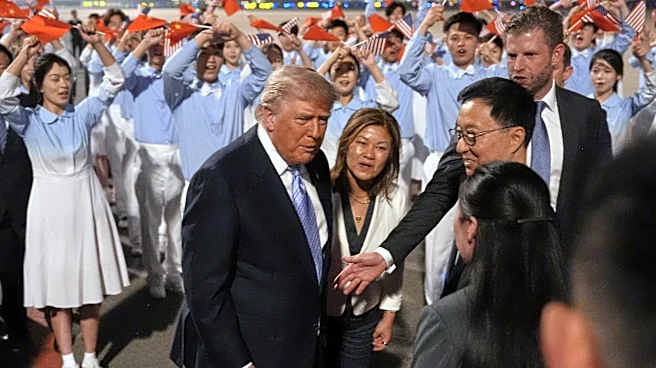
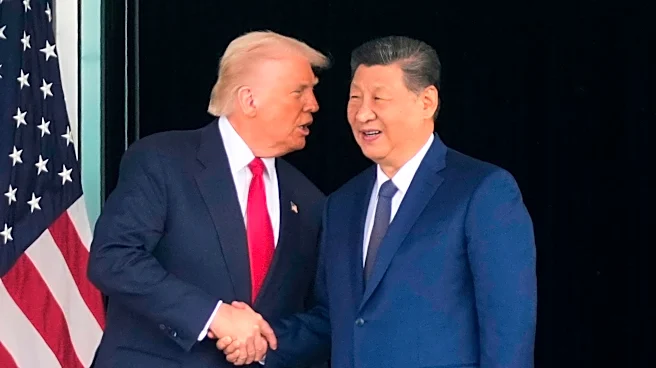
President Donald Trump is visiting China for a three-day summit with Chinese President Xi Jinping, marking the first state visit to China by a sitting U.S. president since 2017. The visit occurs amid heightened economic competition and technological rivalry
between the two nations. The U.S. continues to lead in global economic terms, with a nominal GDP expected to exceed $30 trillion by 2026, while China's GDP is projected at $20 trillion. However, China is growing at a faster rate, with significant advancements in manufacturing and technology sectors, including electric vehicles and renewable energy. The summit is expected to address issues such as trade tensions, supply chain control, and military spending, with both countries vying for influence in global markets.
Why It's Important?
The summit underscores the ongoing economic and technological competition between the U.S. and China, which has significant implications for global trade and security. The U.S. aims to maintain its economic and military dominance, while China seeks to expand its influence through strategic investments and technological advancements. The outcome of the summit could impact global supply chains, particularly in sectors like semiconductors and AI, where both countries are key players. The discussions may also influence future trade policies and international relations, as both nations navigate their roles as economic superpowers.
What's Next?
The summit is likely to focus on preventing further deterioration in U.S.-China relations, with potential agreements on trade and technology exports. Both countries may seek to establish frameworks for cooperation in areas like AI and renewable energy, while addressing contentious issues such as military spending and territorial disputes. The outcome of the summit could set the tone for future diplomatic and economic engagements between the two nations, with implications for global markets and geopolitical stability.