








What's Happening?
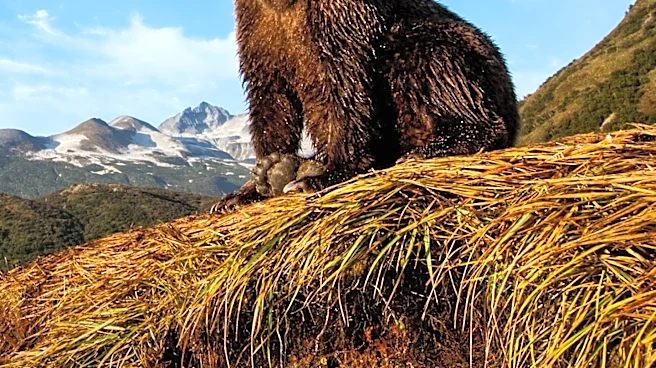
A male brown bear, known locally as Tum-Tum, drowned in late July near Redoubt Falls, Sitka, during a state-run research project conducted by the Alaska Department of Fish and Game. The incident occurred while research staff were capturing and collaring
brown bears at Redoubt Lake as part of a six-year project aimed at counting the bear population on Baranof Island. State wildlife biologist Stephanie Sell confirmed that the five-year-old bear, which was highly habituated, was darted and subsequently took a trail leading to saltwater. Despite immediate and extensive efforts by the staff, including rescue breathing and CPR, the bear could not be resuscitated. Following the incident, Fish and Game staff immediately ceased all capture operations in the area. Sell described the event as a 'highly unfortunate accident,' acknowledging the inherent risks involved in wildlife management and research for both personnel and animals.
Why It's Important?
This incident highlights the inherent risks and ethical considerations involved in wildlife research and management, particularly when dealing with large, wild animals. The Alaska Department of Fish and Game's project to count brown bears on Baranof Island is crucial for understanding population dynamics and ensuring the long-term health and management of this iconic species. However, the drowning of Tum-Tum underscores the potential for unforeseen complications and the difficult balance between scientific inquiry and animal welfare. Such events can lead to public scrutiny of research methodologies and prompt re-evaluation of safety protocols for both animals and researchers. For wildlife conservation efforts, the loss of even one animal, especially a habituated one, can impact data collection and community perception of scientific interventions. It also brings to the forefront the ongoing debate about the necessity and invasiveness of certain research techniques in the pursuit of ecological knowledge.
What's Next?
Following the drowning of the brown bear, the Alaska Department of Fish and Game has ceased all capture operations in the immediate area, indicating a period of review and potential adjustment of their research protocols. It is likely that the department will conduct an internal investigation into the incident to understand the specific circumstances that led to the bear's death and to identify any measures that could prevent similar occurrences in the future. This might involve re-evaluating darting procedures, post-darting monitoring, and site selection for capture operations. Public and animal welfare organizations may also call for greater transparency and accountability regarding wildlife research practices. The long-term six-year project to count bears on Baranof Island will likely continue, but with heightened awareness and potentially revised safety measures to minimize risks to the bear population.
Beyond the Headlines
The tragic death of Tum-Tum, a locally known brown bear, extends beyond a mere research accident to touch upon the complex relationship between humans and wildlife in shared ecosystems. The term 'habituated' suggests a bear accustomed to human presence, which can be a double-edged sword: it might facilitate research but also increase vulnerability to human-induced risks. This incident could spark broader discussions on the ethics of wildlife intervention, particularly when research involves capturing and tranquilizing animals. It also raises questions about the public's emotional connection to individual wild animals and how such incidents influence public support for scientific research. The event serves as a stark reminder of the unpredictable nature of working with wildlife and the constant need for vigilance, adaptation, and ethical consideration in all conservation and research endeavors, prompting a deeper reflection on our responsibility towards the wild inhabitants of our shared planet.