






What's Happening?
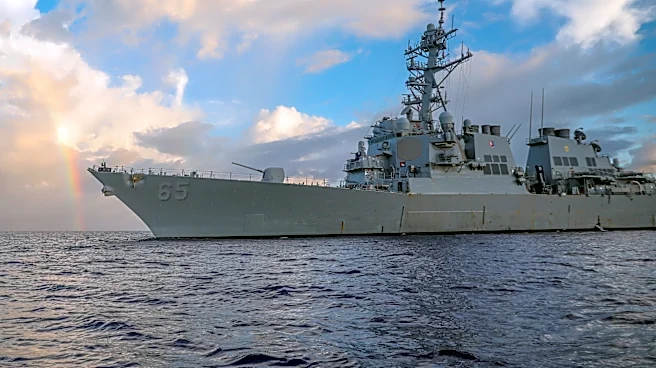
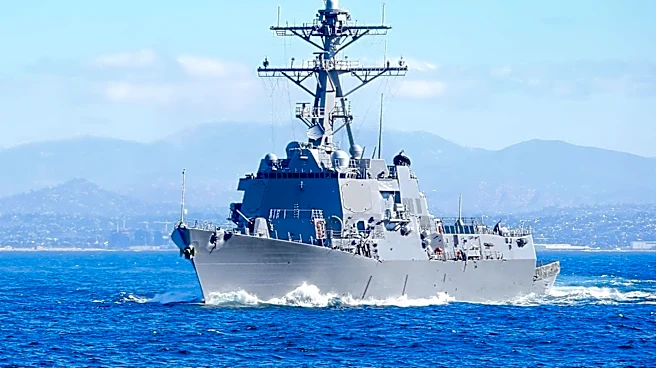
The guided-missile destroyer USS Benfold was without power for four days last month due to an engineering problem while operating in the South China Sea, according to a spokesperson for the Navy's 7th Fleet. The power loss affected essential services
on board, including plumbing, meals, toilets, and air conditioning. There were no reported injuries to the crew. The vessel was subsequently towed by contracted tugboats to Subic Bay, Philippines, for repairs. Experts from the Ship Repair Facility - Japan Regional Maintenance Center met the ship upon arrival on July 28. The crew was provided with off-ship lodging and food starting July 29, and power was restored on July 30. All necessary repairs were completed by August 7, and the USS Benfold departed Subic Bay the following day, with all systems functioning normally, to resume routine operations in the U.S. 7th Fleet. The incident was not publicly disclosed for nearly a month and was first reported by USNI News.
Why It's Important?
This incident highlights potential vulnerabilities in U.S. naval operations, particularly in strategically sensitive regions like the South China Sea. A four-day power outage on a guided-missile destroyer raises concerns about operational readiness and the ability of U.S. naval assets to maintain continuous presence and deterrence. The fact that the vessel was in the South China Sea, described as 'not friendly waters,' underscores the security implications of such a malfunction. While officials stated the Benfold was protected by other air and surface assets, any prolonged vulnerability could be exploited by adversaries. The incident also draws attention to broader concerns about the conditions and maintenance of U.S. Navy ships, especially in light of ongoing issues reported aboard other vessels like the USS Abraham Lincoln, which has been deployed for an extended period. Republican Rep. Don Bacon has called for congressional oversight and testimony from top Navy officials, indicating the political and national security significance of this event.
What's Next?
The U.S. Navy is currently investigating the cause of the engineering problem that led to the power outage on the USS Benfold. The findings of this investigation will be crucial for identifying systemic issues and implementing corrective measures to prevent similar incidents in the future. Given the call for congressional oversight by Rep. Don Bacon, it is likely that Navy officials will be required to provide testimony and explanations to Congress regarding the incident and the broader state of naval readiness. This could lead to increased scrutiny of maintenance protocols, deployment schedules, and resource allocation within the Navy. Furthermore, the incident may prompt a review of contingency plans for naval vessels operating in contested waters, ensuring that adequate support and repair capabilities are readily available. The ongoing concerns about conditions on other deployed ships, such as the USS Abraham Lincoln, suggest that this incident could contribute to a larger discussion about the well-being of naval personnel and the sustainability of current deployment strategies.
Beyond the Headlines
The power outage on the USS Benfold, while seemingly an isolated mechanical failure, touches upon deeper implications regarding the U.S. Navy's global posture and its ability to project power. The South China Sea is a critical geopolitical flashpoint, and any perceived weakness in U.S. naval presence can have significant strategic repercussions. This event could fuel narratives from rival nations regarding the reliability and operational capacity of the U.S. fleet. Beyond the immediate technical fix, the incident raises questions about the age of naval assets, the adequacy of maintenance budgets, and the strain placed on crews by prolonged deployments. The call for congressional oversight suggests a potential for policy shifts or increased funding allocations to address these underlying issues. Moreover, the delayed public disclosure of the incident could impact public trust and transparency, prompting calls for more timely reporting of operational challenges within the military. The broader context of crew welfare and mental health concerns on other ships further emphasizes the human element in maintaining a robust and effective naval force.