


What's Happening?
Scientists from the Unidad Académica de Estudios Territoriales (UAET) Oaxaca, part of the Instituto de Geografía de la UNAM, have identified bacterial communities with the potential to significantly boost sustainable agriculture. This discovery was made
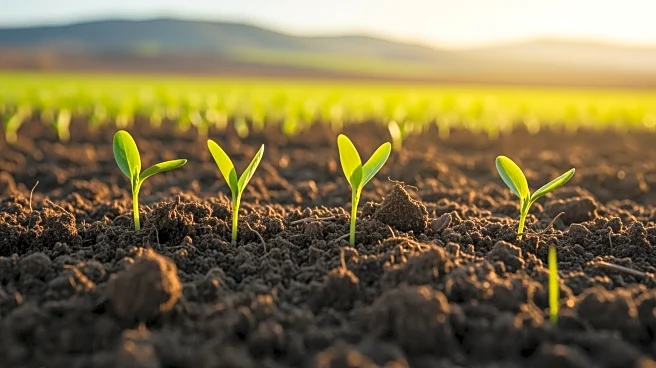
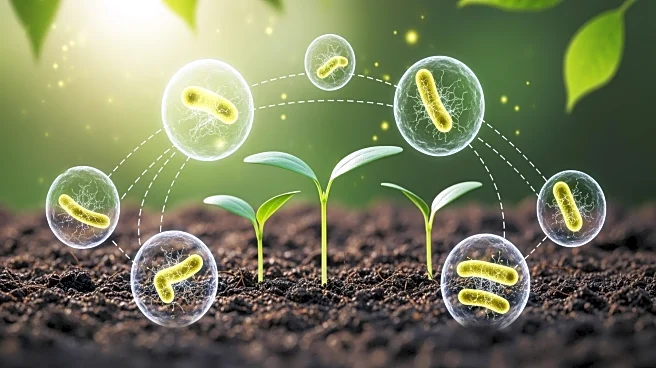
in the UNESCO Global Geopark Mixteca Alta, a region with a rich history of traditional agricultural practices spanning over 3,400 years. The bacteria, identified through advanced genetic sequencing, are capable of naturally suppressing pathogens, improving nutrient cycling, and generating stable organic matter. These capabilities enhance soil fertility and promote plant growth, making them valuable for ecological restoration. The dominant bacterial groups include Proteobacteria, Actinobacteria, Acidobacteria, and Chloroflexi, among others. This discovery opens the door to developing local biofertilizers and biostimulants, reducing reliance on industrial agrochemicals.
Why It's Important?
The discovery of these bacterial communities is significant for both national and global agriculture. By reducing dependence on industrial agrochemicals, which are often subject to international market fluctuations, this innovation strengthens food sovereignty in Mexico. It offers a regenerative solution to soil degradation, a major issue affecting much of the country's arable land. Furthermore, the integration of modern genomic science with traditional agricultural knowledge positions Mexico as a leader in sustainable agriculture. This approach not only enhances productivity and soil health but also contributes to global sustainability efforts by addressing challenges related to climate change and food security.
What's Next?
The practical application of these bacterial communities is expected to lead to the recovery of degraded soils and improved agricultural productivity. As local biofertilizers and biostimulants are developed, there will likely be a shift away from chemical-intensive farming practices. This could result in reduced environmental impacts and increased resilience of agricultural ecosystems. The Mixteca Alta model may serve as a blueprint for other regions seeking to integrate traditional knowledge with modern science to achieve sustainable agricultural practices.
Beyond the Headlines
This discovery highlights the importance of combining scientific innovation with traditional practices. The Mixteca Alta region exemplifies how ancestral agricultural methods, such as lama-bordos and terraces, create ideal environments for beneficial bacterial communities. This synergy between science and tradition not only enhances soil health and productivity but also represents a broader regenerative strategy with significant environmental, social, and economic benefits. As such, it underscores the potential of local communities to contribute to global sustainability through their accumulated wisdom and practices.