



What's Happening?
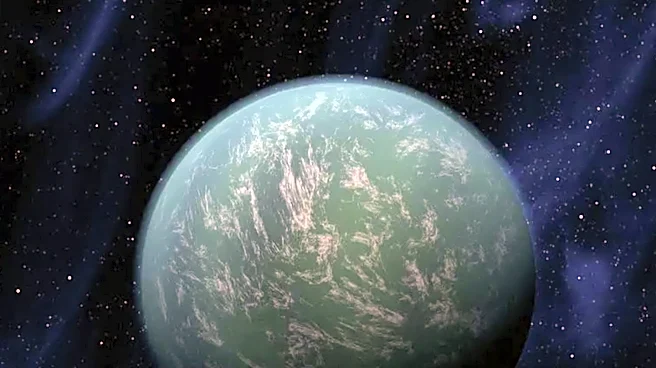
An international team led by the University of Oxford has discovered two giant exoplanets, TOI-791 b and TOI-791 c, with densities lower than cotton candy. These 'super-puff' planets orbit an F7-type dwarf star in the constellation of Volans, approximately
1,110 light years away. The discovery, published in the Monthly Notices of the Royal Astronomical Society, provides insights into the formation and evolution of such rare planetary types. The planets' low density suggests they may have formed in cold, distant regions of their protoplanetary disc.
Why It's Important?
The discovery of these super-puff planets is significant for understanding planetary formation and evolution. Their unique characteristics challenge existing models and suggest that there may be more diversity in planetary systems than previously thought. This finding could lead to new theories about how planets form and evolve, particularly in terms of atmospheric composition and structure. The research also underscores the importance of continued exploration and study of exoplanets, as each new discovery adds to the understanding of the universe.
What's Next?
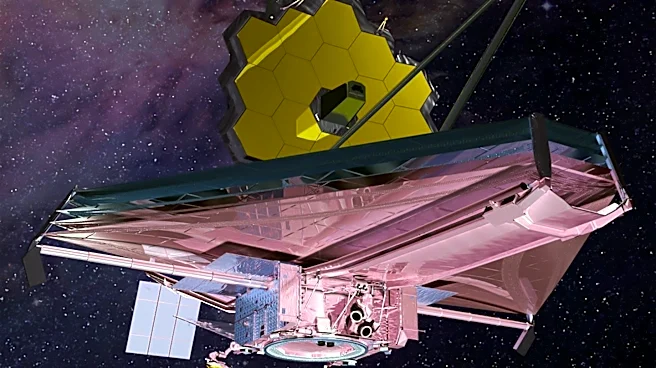
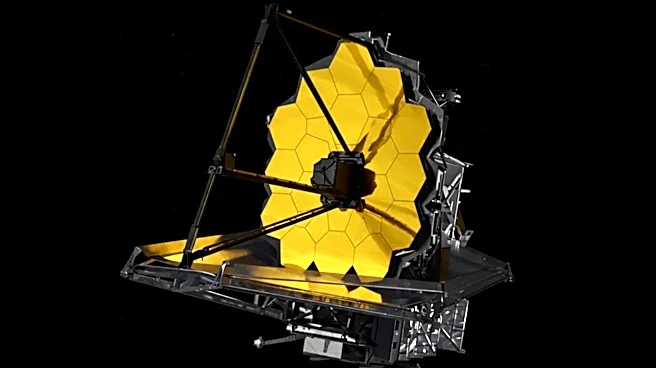
Further observations, potentially using the James Webb Space Telescope, are planned to analyze the atmospheres of these planets. Researchers aim to determine the presence of elements like carbon, nitrogen, and oxygen, which could provide clues about their formation. The study of TOI-791 b and c may also inspire searches for similar planets, expanding the catalog of known exoplanets and enhancing the understanding of planetary diversity.