
What's Happening?
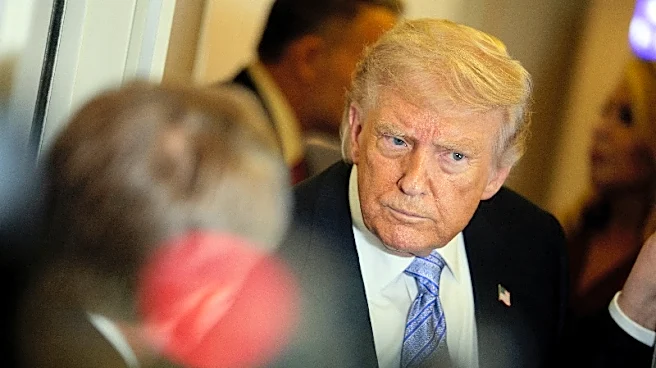
President Trump has recently shifted U.S. policy towards China by relaxing export controls on advanced technology, a move that has sparked debate over its implications for U.S.-China relations. Historically,
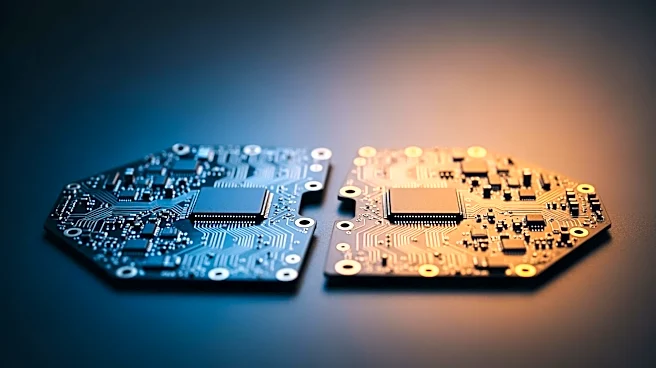
both Republican and Democratic administrations have treated China as a strategic competitor, tightening export controls and reducing economic exposure. However, Trump has reversed this trend by approving sales of advanced chips, such as Nvidia's H200, to major Chinese tech firms. This decision comes amid a broader strategy to foster a personal relationship with Chinese leader Xi Jinping, which Trump believes can ensure stability. Despite this diplomatic approach, concerns have been raised about the potential risks to U.S. interests, particularly in terms of military and technological competition.
Why It's Important?
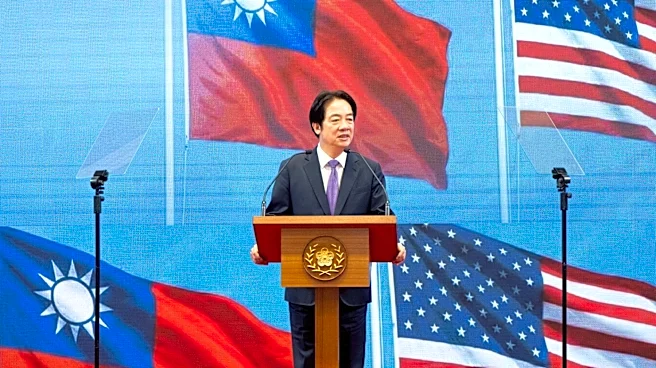
The relaxation of export controls on advanced technology to China could have significant implications for U.S. national security and economic interests. By allowing the sale of advanced chips to China, the U.S. may inadvertently bolster China's military capabilities, which rely on such technologies. This shift in policy could undermine the strategic advantage the U.S. has sought to maintain over China. Additionally, the move has raised questions about the U.S. commitment to defending Taiwan, as Trump's comments have cast doubt on longstanding assurances. The decision to prioritize personal diplomacy over strategic competition may embolden China, potentially leading to a more aggressive stance in the Indo-Pacific region.
What's Next?
The future of U.S.-China relations remains uncertain as President Trump continues to engage in leader-to-leader diplomacy with Xi Jinping. Upcoming meetings between the two leaders could further shape the trajectory of this relationship. However, the relaxation of competitive policies may prompt calls for a reassessment of U.S. strategy towards China, particularly from those who view strategic competition as essential to safeguarding U.S. interests. The potential for increased Chinese influence in high-tech industries and military advancements could lead to renewed debates within the U.S. about the balance between cooperation and competition with China.
Beyond the Headlines
The shift in U.S. policy towards China highlights broader geopolitical dynamics, including the role of major U.S. companies in facilitating China's technological growth. Companies like Apple have significantly invested in China's tech sector, contributing to its industrial and technological base. This 'transfer of technology and know-how' has been described as a geopolitical event with far-reaching consequences. The ethical and strategic implications of such corporate engagements are likely to be scrutinized as the U.S. navigates its complex relationship with China. Additionally, the potential for cyber threats from China, as evidenced by the activities of groups like Volt Typhoon, underscores the need for a comprehensive approach to cybersecurity.