



What's Happening?
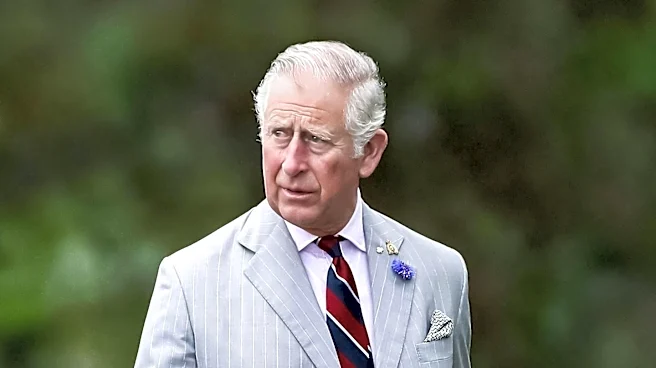
King Charles III reportedly harbors a significant childhood regret: never having visited a Butlin's holiday resort. This revelation emerged from a close friend following the monarch's 78th birthday celebrations on November 14. Despite having traveled
extensively to numerous global destinations, the budget holiday chain remains on his personal 'bucket list.' According to the friend, both King Charles and his sister, Princess Anne, frequently pleaded with their parents, the late Queen Elizabeth II and Prince Philip, to take them to Butlin's, but their requests were consistently denied. The Queen would reportedly respond, 'I don't quite think we will be able to manage that.' A spokesperson for Butlin's has since extended an invitation to the King and his family to visit one of their resorts, noting that his late mother visited in 1963.
Why It's Important?
This anecdote offers a unique and relatable insight into the personal life and childhood desires of King Charles III, humanizing the monarch beyond his royal duties. It highlights a universal childhood experience of longing for a particular holiday or activity, making him more accessible to the general public. For the U.S. audience, this story provides a glimpse into British cultural touchstones like Butlin's, which might be unfamiliar but represent a common form of family vacation. The contrast between the King's privileged upbringing and his unfulfilled desire for a 'common' holiday underscores the idea that even those in extraordinary positions have ordinary wishes. It also subtly reflects on parental decisions and the balance between royal protocol and personal desires within the monarchy.
What's Next?
Following the public revelation and Butlin's invitation, there is a possibility that King Charles might accept the offer, perhaps for a private visit or a public engagement that could generate significant positive publicity for both the monarchy and the resort chain. Such a visit would be a symbolic gesture, demonstrating relatability and a connection to everyday British life. It could also spark renewed interest in Butlin's among the public. The story might also encourage further sharing of personal anecdotes from the Royal Family, contributing to a more open and modern image of the monarchy. The invitation from Butlin's also serves as a clever marketing opportunity for the resort.
Beyond the Headlines
This story subtly explores themes of childhood longing, the impact of parental decisions, and the contrast between public image and private desires. It suggests that even within the confines of royal life, there are unfulfilled childhood wishes that persist into adulthood. The anecdote also touches upon the cultural significance of places like Butlin's in British society, representing accessible family entertainment. From a broader perspective, it illustrates how seemingly small personal details can resonate deeply with the public, fostering a sense of shared humanity with figures often perceived as distant. The story also highlights the enduring power of nostalgia and the simple pleasures that can be missed, regardless of one's status.