






What's Happening?
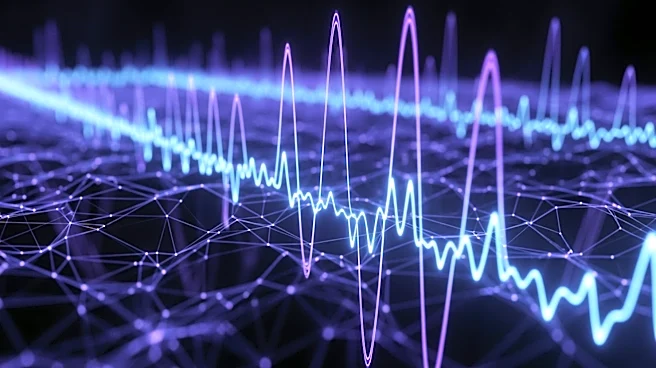
A 2013 study conducted by researchers at the University of Michigan, led by Jimo Borjigin, discovered that the brains of rats exhibited a surge of high-frequency gamma waves in the moments following cardiac arrest. This unexpected finding was observed
when electrodes were placed in the cortices of laboratory rats, revealing a burst of gamma oscillations that were more coherent than those seen during normal waking states. The study, published in a major scientific journal, has become a focal point in the field of dying-brain neuroscience. The researchers propose that this gamma surge could be the neural basis for the vivid imagery reported by survivors of near-death experiences. The study has sparked further research and debate about the mechanisms underlying these experiences, with some suggesting that similar processes could occur in human brains during cardiac arrest.
Why It's Important?
The findings from the University of Michigan study have significant implications for understanding the neural mechanisms of consciousness and near-death experiences. The gamma wave surge observed in rats suggests that the brain may remain highly active and coordinated even in the moments leading up to death. This challenges the traditional view that the brain simply shuts down during cardiac arrest. If similar processes occur in humans, it could provide a scientific basis for the vivid and often life-changing experiences reported by survivors of cardiac arrest. The study also raises questions about the nature of consciousness and the potential for the brain to generate complex experiences even in a state of severe physiological stress. This research could influence future studies on consciousness and the development of new approaches to studying the brain's response to life-threatening conditions.
What's Next?
Following the initial findings, researchers have continued to explore the implications of the gamma wave surge in dying brains. A subsequent study in 2022 documented a similar gamma surge in a human patient who experienced cardiac arrest, although the conditions were not controlled, and the patient had a history of epilepsy. This has led to further investigations into the phenomenon, including studies on comatose patients at the University of Michigan. Researchers are examining whether the gamma surge is a consistent feature of the dying brain and what factors might influence its occurrence. The ongoing research aims to better understand the relationship between gamma activity and consciousness, potentially leading to new insights into the brain's functioning at the end of life.
Beyond the Headlines
The study's findings have broader implications for the philosophical and scientific understanding of consciousness. The observation of a highly coordinated gamma surge in dying brains challenges existing theories about the nature of consciousness and its neural correlates. It suggests that the brain's final moments may involve a level of neural activity that is not fully captured by current models of consciousness. This has prompted some researchers to propose new theories about the structural features of consciousness that go beyond traditional EEG measurements. The study also highlights the potential for near-death experiences to provide valuable insights into the brain's capabilities and limitations, offering a unique perspective on the human experience of life and death.