
What's Happening?
Recent research on the Galápagos Islands has uncovered ongoing evolutionary changes in the plant genus Scalesia, known as the Galápagos giant daisies. These plants have shown repeated evolution and emerging
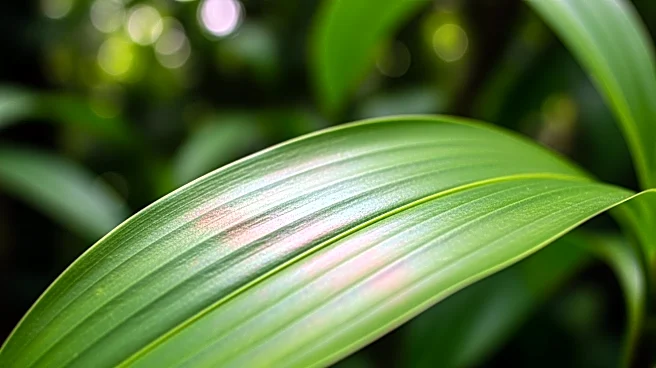
species, highlighting the flexibility of evolutionary processes. The study, involving a global team of scientists, found that the Scalesia genus has rapidly adapted to various island environments, resulting in significant genetic diversity. The research revealed that lobed leaves, a trait that helps plants cope with heat and dryness, evolved multiple times through different genetic pathways. This discovery provides a clear example of parallel evolution, where similar traits emerge independently in different lineages.
Why It's Important?
The findings from the Galápagos Islands offer valuable insights into the mechanisms of evolution and the adaptability of species to changing environments. Understanding how complex traits evolve repeatedly can inform conservation strategies and enhance our knowledge of biodiversity. The study also underscores the importance of preserving isolated populations as distinct conservation units, which could influence future conservation efforts in the Galápagos. The research highlights the ongoing nature of evolution and the potential for new species to emerge, contributing to the broader understanding of evolutionary biology.
What's Next?
The researchers suggest that each isolated population of Scalesia should be treated as its own conservation unit, which may lead to changes in how the Galápagos ecosystem is managed and protected. Further studies could explore the genetic pathways involved in other adaptive traits and their implications for biodiversity conservation. The ongoing evolution in the Galápagos Islands continues to provide a unique opportunity for scientists to study evolutionary processes in real-time.