








What's Happening?
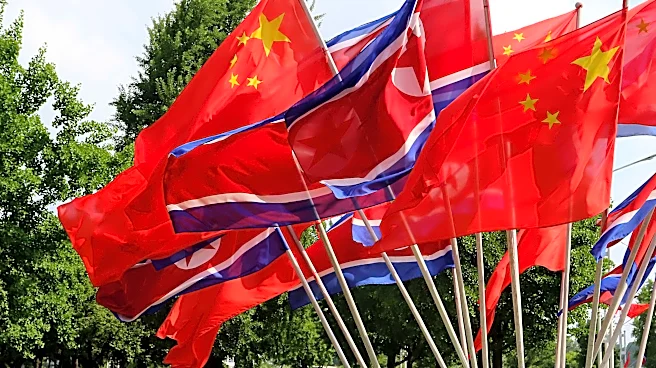
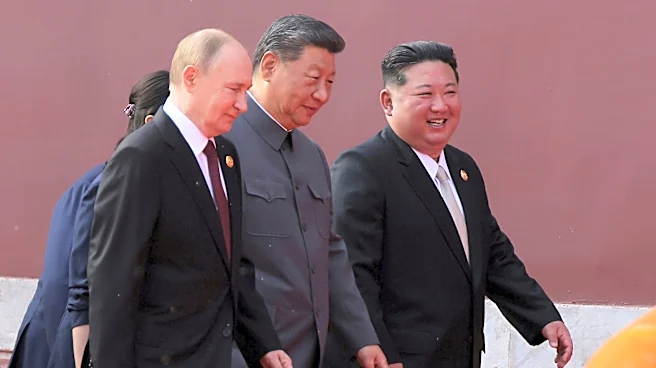
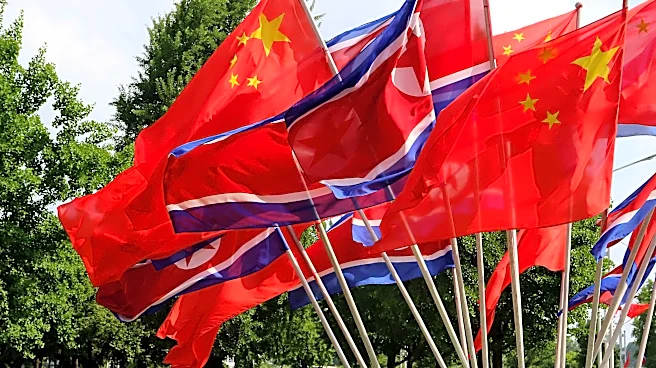
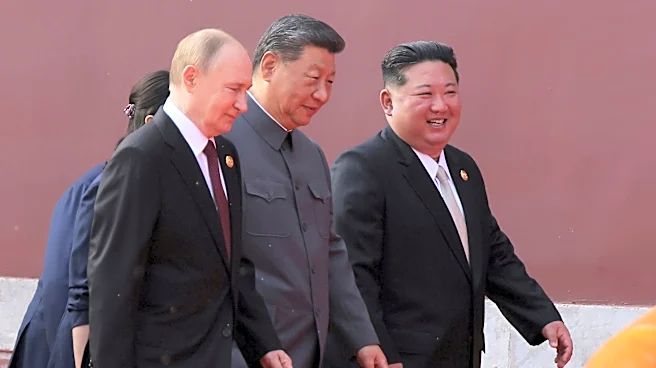
Chinese President Xi Jinping is visiting North Korea for the first time in nearly seven years, aiming to reinforce Beijing's influence over Pyongyang, which has been increasingly aligning with Russia. The visit, starting Monday, includes talks with North Korean
leader Kim Jong Un. Xi has pledged unwavering friendship and intends to deepen cooperation across various sectors, including military collaboration. Analysts suggest North Korea may seek economic concessions and possibly China's tacit recognition of its nuclear status during the summit. This visit comes as North Korea has been enhancing its military ties with Russia and advancing its nuclear capabilities, which has given Pyongyang new leverage in its dealings with China.
Why It's Important?
The visit is significant as it highlights China's strategic interest in maintaining influence over North Korea amidst its growing ties with Russia. For the U.S., this development could impact diplomatic efforts, as North Korea's strengthened position might complicate denuclearization talks. China's engagement with North Korea also reflects its broader geopolitical strategy to counterbalance Russian influence and manage regional stability, particularly concerning Taiwan and Japan's defense posture. The outcome of this visit could affect regional security dynamics and influence future diplomatic interactions involving North Korea, China, and the U.S.
What's Next?
Following Xi's visit, there may be increased diplomatic activity involving North Korea, China, and potentially the U.S. Analysts speculate that Xi might convey a message from President Trump, who has shown interest in resuming talks with Kim Jong Un. However, North Korea's insistence on the U.S. dropping its denuclearization precondition remains a sticking point. The visit could also lead to further military and economic agreements between China and North Korea, impacting regional security and economic policies.
Beyond the Headlines
Xi's visit underscores the complex geopolitical landscape in East Asia, where China seeks to balance its relationships with both North Korea and Russia. The visit may also influence China's domestic and international policies, as it navigates its role as a regional power. Additionally, the visit could have implications for South Korea, which hopes for a constructive role in addressing Korean Peninsula issues. The evolving dynamics between these nations could lead to shifts in alliances and power structures in the region.