






What's Happening?
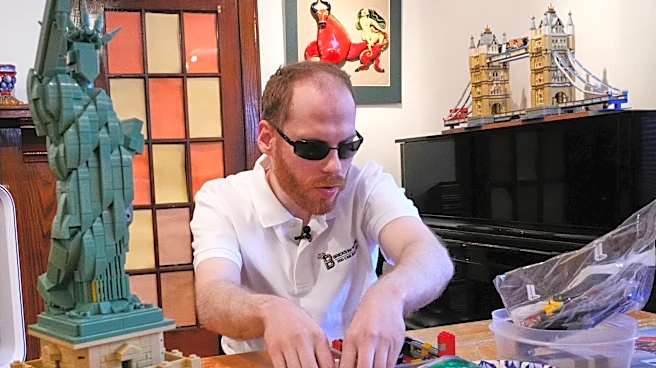
Travis Davis, a University of New Mexico alum, has become a prominent advocate for disability rights and self-advocacy. Graduating in 2016 with a master's degree in adapted physical education, Davis has since worked as a disability advocate, consultant,
coach, and public speaker. He emphasizes the importance of self-advocacy for individuals with disabilities, highlighting that being vocal about one's needs is crucial to achieving personal goals. Davis has shared his journey through public speaking, including a TEDx talk where he introduced 'CRUTCH' as an acronym for creativity, resilience, understanding, trust, confidence, and heart. His experiences at UNM, including courses on legal rights and nonprofit management, have enriched his understanding and advocacy efforts. Davis continues to inspire others by encouraging them to find community and persist in their goals, regardless of disabilities.
Why It's Important?
Davis's advocacy highlights the ongoing need for inclusivity and accessibility in educational institutions and beyond. His work underscores the importance of creating environments where individuals with disabilities can thrive without limitations. By sharing his personal experiences and strategies for overcoming challenges, Davis provides a roadmap for others facing similar obstacles. His emphasis on self-advocacy and community building is particularly significant as it empowers individuals to take control of their narratives and push for systemic changes. This advocacy is crucial in fostering a more inclusive society where diverse perspectives are valued and accommodated. As educational institutions like UNM prepare for leadership changes, Davis's call for prioritizing accessibility and inclusivity could influence policy and cultural shifts that benefit all students.
What's Next?
Travis Davis is scheduled to speak at DisruptHR in Albuquerque on April 20, where he will continue to share his insights on disability advocacy and inclusion. His ongoing efforts aim to influence human resources professionals and other stakeholders to adopt more inclusive practices. As UNM undergoes a leadership transition, Davis's advocacy for accessibility and inclusivity may become part of the dialogue for the incoming administration. This could lead to enhanced support systems and resources for students with disabilities, ensuring that the university remains a leader in promoting equal opportunities for all students.