





What's Happening?
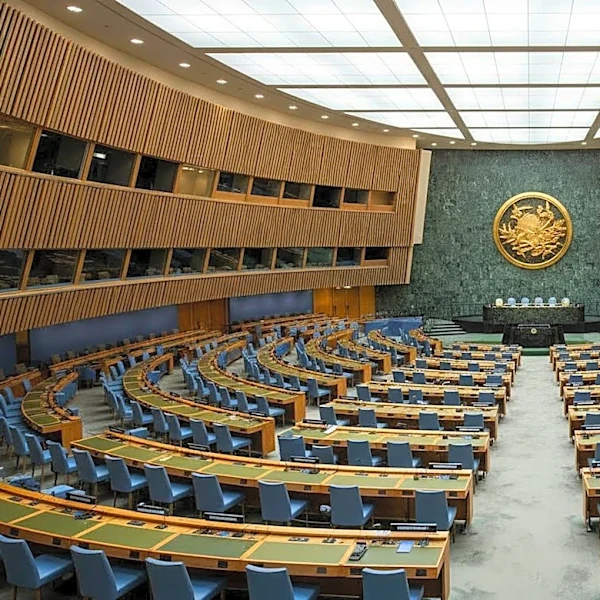
The Ninth Session of the Biological and Toxin Weapons Convention (BWC) Working Group in Geneva is nearing its conclusion with a draft report largely agreed upon, yet fundamental disagreements persist. Negotiators are under pressure to strengthen the 1972
treaty before the 2027 Review Conference. Key areas of discussion include international cooperation, scientific and technological developments, confidence-building measures, verification, national implementation, response preparedness, and institutional arrangements. While 90.6% of the draft report text has been accepted, contentious issues such as verification frameworks, transfer controls, and donor eligibility for a proposed international cooperation fund remain unresolved. The Chair, Ambassador Frederico S Duque Estrada Meyer of Brazil, has temporarily set aside three highly debated topics: economic sanctions as a compliance tool, decision-making procedures for new oversight bodies, and the powers of the annual Meeting of States Parties, in an effort to facilitate progress. Russia and Iran have formally objected to various provisions, further complicating consensus-building. A significant dispute has also arisen over trust fund financing, with the U.S. objecting to language that would allow non-state actors like the European Union to contribute, a position that other delegations find to be a shift without clear explanation.
Why It's Important?
The ongoing disagreements within the BWC Working Group have significant implications for global biosecurity and U.S. national interests. The failure to reach consensus on critical aspects like verification frameworks could undermine the effectiveness of the BWC, leaving potential loopholes for the development and proliferation of biological weapons. For the U.S., a robust and verifiable BWC is crucial for preventing bioterrorism and ensuring international stability. The dispute over trust fund financing, specifically the U.S. objection to non-state actor contributions, could limit the financial resources available for international cooperation and assistance, potentially hindering global efforts to strengthen biodefense capabilities. This could disproportionately affect developing nations that rely on such funding to enhance their biosecurity infrastructure. Furthermore, the Chair's warning about the rapid convergence of artificial intelligence and biology highlights an emerging threat that necessitates strong international governance. A weakened BWC could leave the U.S. and its allies more vulnerable to novel biological threats, impacting public health, economic stability, and national security.
What's Next?
Negotiations for the BWC Working Group are scheduled to resume through August 21, with a final session planned for December. The immediate goal is to finalize recommendations across the seven issue areas, including the establishment of mechanisms to review scientific and technological developments and to facilitate international cooperation. However, achieving consensus on the remaining contentious issues, particularly verification and financing, will be challenging given the formal objections from Russia and Iran and the U.S. stance on donor eligibility. The outcomes of these negotiations will directly influence the decisions made at the 2027 Review Conference, which will determine which recommendations are implemented immediately and which are deferred until the 2032 Review Conference. The ongoing discussions will likely involve continued diplomatic efforts to bridge the divides, potentially through compromises on the scope and nature of verification measures and alternative financing models. The international community will be closely watching to see if a strengthened BWC can emerge to address the evolving landscape of biological threats.
Beyond the Headlines
The challenges faced by the BWC Working Group extend beyond immediate policy disagreements, touching upon deeper geopolitical tensions and the evolving nature of warfare. The reluctance of some nations to accept robust verification mechanisms reflects a broader distrust among state actors, potentially hindering transparency and accountability in biological research. The Chair's emphasis on the convergence of AI and biology underscores a profound ethical and security dilemma: how to harness technological advancements for medical progress while preventing their misuse for nefarious purposes. This raises questions about the adequacy of existing international legal frameworks to govern rapidly advancing technologies. The debate over donor eligibility for the trust fund also highlights the complex interplay between state sovereignty and the role of non-state actors in global governance. A failure to adapt the BWC to these new realities could lead to a 'governance gap,' where the pace of scientific innovation outstrips the collective ability to regulate and prevent misuse, potentially ushering in a new era of biological warfare threats with far-reaching and unpredictable consequences for global security and human well-being.