




What's Happening?
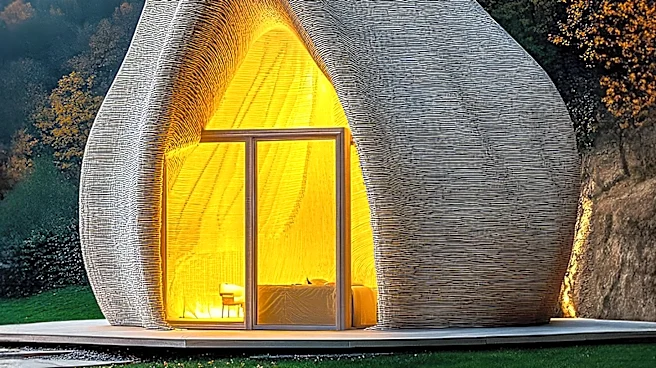
The University of Maine's Advanced Structures and Composites Center has been awarded $4 million in federal funding. This allocation, announced by U.S. Sen. Susan Collins, is designated for the construction of a neighborhood comprising nine 3D-printed
homes in the Bangor area. These homes are specifically intended for individuals experiencing homelessness. The University of Maine previously developed a 600-square-foot prototype of a 3D-printed home in 2022. The new homes will be constructed using wood sawmill waste, a sustainable material, and are engineered to withstand the harsh Maine winters. This initiative aims to provide a durable and innovative housing solution for a vulnerable population.
Why It's Important?
This project is significant as it addresses the critical issue of homelessness in Maine through an innovative and sustainable approach. By utilizing 3D printing technology and wood sawmill waste, the University of Maine is pioneering a cost-effective and environmentally friendly method for housing construction. This could serve as a model for other communities across the U.S. grappling with housing crises and seeking sustainable building solutions. The initiative not only provides immediate shelter for homeless individuals but also demonstrates the potential for advanced manufacturing techniques to create resilient and affordable housing. The involvement of federal funding underscores a growing recognition of the need for creative solutions to societal challenges, potentially influencing future policy and funding allocations for similar projects nationwide.
What's Next?
The next steps involve the University of Maine proceeding with the construction of the nine 3D-printed homes in the Bangor area. The project will likely focus on the practical implementation of the construction process, refining the use of wood sawmill waste, and ensuring the homes meet the necessary standards for durability and habitability in Maine's climate. There will also be efforts to integrate support services for the future residents of these homes. If successful, this project could lead to further federal and state funding for similar initiatives, potentially expanding the use of 3D-printed housing as a viable solution for homelessness in other regions. The project's progress will be closely watched as a potential blueprint for addressing housing shortages and promoting sustainable construction practices.
Beyond the Headlines
Beyond the immediate provision of housing, this project carries broader implications for sustainable development and social equity. The use of wood sawmill waste highlights a commitment to circular economy principles, transforming industrial byproducts into valuable resources. This could spur further research and development into sustainable building materials and construction methods, reducing the environmental footprint of housing development. Furthermore, by focusing on the homeless population, the initiative addresses a fundamental human right to shelter, potentially fostering greater social inclusion and reducing the societal costs associated with chronic homelessness. The project also challenges traditional notions of housing construction, demonstrating how technological innovation can be harnessed for social good and community resilience.