








What's Happening?
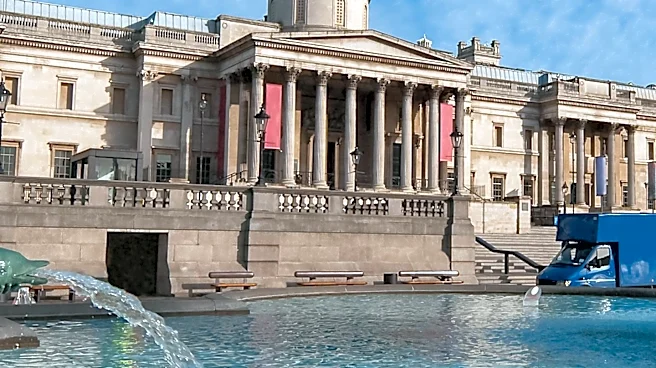
The Wadsworth Atheneum in Hartford, Connecticut, has acquired several leather benches previously used at the National Gallery in London. These benches, which provided seating for visitors at the London institution, were sold off by the National Gallery last
year through Bellmans auction house. The benches, described as modern reproductions made mostly in the 1990s, were sold for approximately £1,200 each. The National Gallery cited issues with fire safety ratings and cleaning difficulties, which posed risks to their art collection, as reasons for their removal. The Wadsworth Atheneum has since installed several of these benches in its Morgan Great Hall, with an online film from the museum highlighting the transatlantic journey of the furniture.
Why It's Important?
This acquisition by the Wadsworth Atheneum signifies a unique cultural exchange and a practical solution for museum visitor comfort. For the Wadsworth Atheneum, obtaining these benches from a renowned international institution adds a layer of historical and cultural narrative to its own spaces, potentially enhancing the visitor experience. It also demonstrates a resourceful approach to furnishing, repurposing items from another esteemed museum. For the National Gallery, the sale underscores the operational challenges faced by large cultural institutions, particularly concerning safety regulations and collection preservation. The decision to replace the benches due to fire ratings and cleaning difficulties highlights the stringent standards required for maintaining art collections and ensuring public safety in historic buildings, which can be a significant financial and logistical burden for museums globally.
What's Next?
The benches are now integrated into the Morgan Great Hall at the Wadsworth Atheneum, where they will continue to serve their purpose of providing seating for museum visitors. This move is likely to be well-received by patrons, offering a comfortable and historically resonant place to rest while viewing art. The Wadsworth Atheneum may use the story of the benches' origin as part of its interpretive programming, further engaging visitors with the broader world of museum operations and cultural heritage. Other museums facing similar challenges with aging furniture or safety compliance might look to the National Gallery's decision as a precedent for managing their own assets, potentially leading to more inter-museum exchanges or sales of surplus items.
Beyond the Headlines
The migration of these benches from London to Hartford subtly illustrates the interconnectedness of global cultural institutions and the evolving standards of museum management. Beyond their functional purpose, these benches carry a symbolic weight, having been part of the visitor experience at one of the world's most famous art galleries. Their journey to the Wadsworth Atheneum represents a continuation of their 'museum careers,' bridging two distinct cultural landscapes. This event also subtly highlights the often-unseen operational aspects of museums, such as fire safety regulations and pest control, which are crucial for preserving priceless art collections but rarely discussed publicly. It underscores that even seemingly mundane objects within a museum can have a rich history and contribute to the overall visitor experience.