


What's Happening?
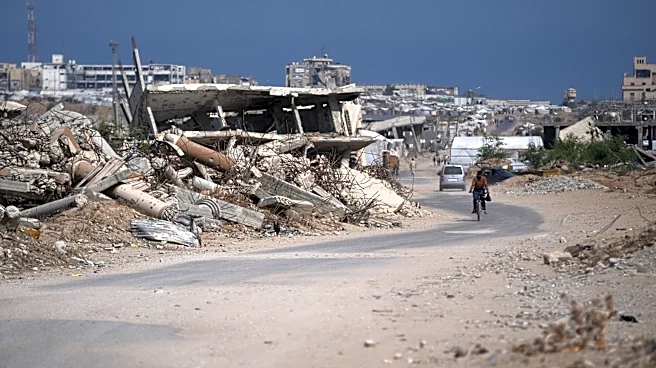
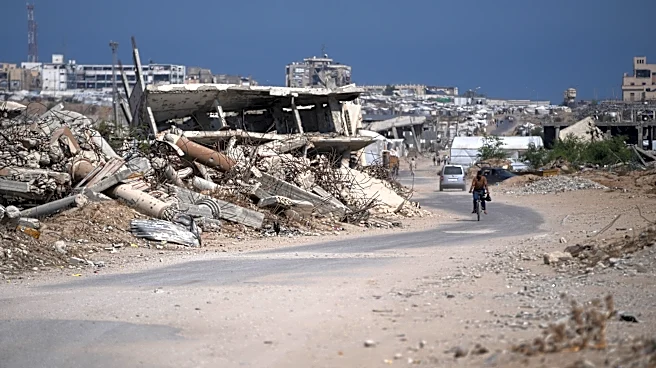
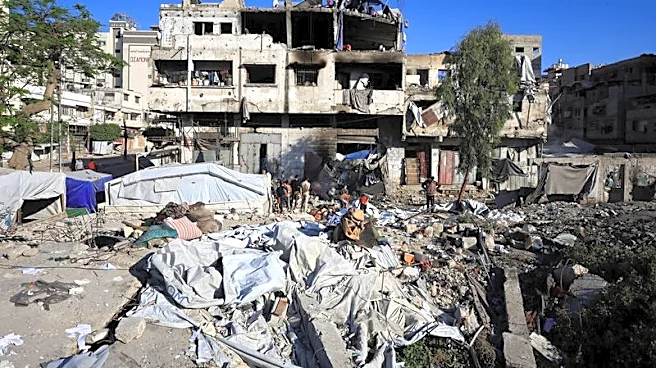
President Trump has announced a historic agreement for the complete disarmament of Hamas and other armed groups in Gaza, as part of the Gaza Peace Plan. This development follows talks in Cairo between mediators and Hamas leaders, resulting in a phased
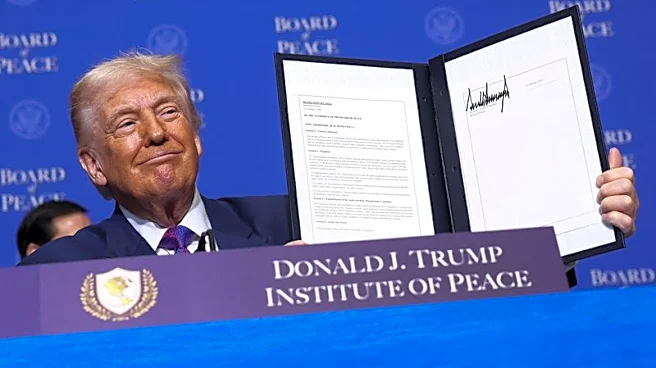
disarmament agreement. The Board of Peace, initially proposed in September 2025 and formally established in January, is tasked with overseeing this process. The United States, along with Egypt, Qatar, and Turkiye, played significant roles in mediating the agreement. The Board of Peace, headquartered at the Donald J Trump Institute of Peace in Washington, was authorized by a UN Security Council resolution to establish an international stabilization force in Gaza. Pakistan, a founding member of the Board, has welcomed these developments, emphasizing the importance of a credible political process for Palestinian self-determination.
Why It's Important?
The disarmament agreement in Gaza represents a significant step towards peace and stability in the region. It highlights the role of international cooperation in conflict resolution, with the United States and other mediating countries playing crucial roles. The agreement could lead to a reduction in violence and pave the way for a sustainable peace process. For the U.S., this development underscores its influence in international diplomacy and conflict resolution. The successful implementation of the Gaza Peace Plan could enhance the U.S.'s standing as a peace broker in the Middle East, potentially leading to broader geopolitical stability. The disarmament also aligns with international efforts to promote peace and security, reinforcing the importance of multilateral cooperation in addressing global conflicts.
What's Next?
The next steps involve the phased implementation of the disarmament agreement, which will require continued cooperation among the mediating countries and the parties involved. The Board of Peace will oversee the process, ensuring compliance and addressing any challenges that arise. The international stabilization force authorized by the UN Security Council will play a critical role in maintaining peace and security during the disarmament process. The success of this initiative could influence future peace efforts in other conflict zones, setting a precedent for international collaboration in conflict resolution. Stakeholders will need to remain engaged and committed to the peace process to ensure its success and sustainability.
Beyond the Headlines
The disarmament agreement in Gaza could have broader implications for the Middle East peace process. It may serve as a model for resolving other long-standing conflicts in the region, demonstrating the effectiveness of international mediation and cooperation. The agreement also highlights the importance of addressing the root causes of conflict, such as political grievances and economic disparities, to achieve lasting peace. Additionally, the involvement of diverse countries in the Board of Peace reflects a growing recognition of the need for inclusive and representative peace-building efforts. This development could encourage other regions to adopt similar approaches to conflict resolution, promoting global peace and security.