








What's Happening?
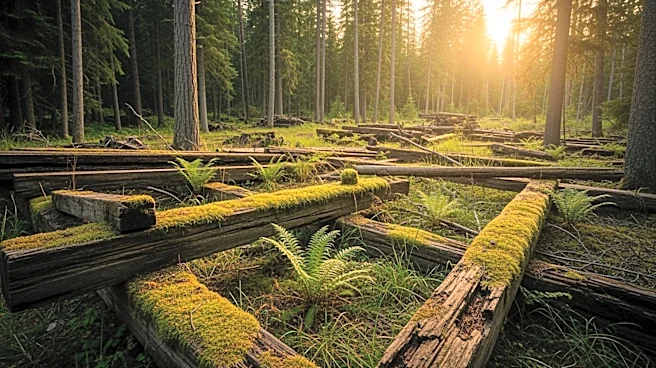
Centralia, once a bustling lumber town in Florida, has become a part of the Chassahowitzka Wildlife Management Area after being abandoned in the early 20th century. Founded in 1910, Centralia was a significant logging hub in Hernando County, thriving
due to its large lumber mill and the surrounding cypress swamps. The town supported over 1,000 sawmill workers and their families, featuring amenities like a post office, general store, and schoolhouse. However, by 1917, the depletion of local forests led to the mill's closure, and the town was deserted by the next decade. Today, the remnants of Centralia, including concrete ruins and brick frameworks, are part of a nature preserve managed by the Florida Fish and Wildlife Conservation Commission. The area is also known for its diverse wildlife and opportunities for scuba diving in its underwater caverns.
Why It's Important?
The transformation of Centralia from a thriving industrial town to a nature preserve highlights the broader economic and environmental shifts in Florida. The decline of the logging industry and the subsequent rewilding of the area reflect changes in land use and conservation priorities. This shift is significant for environmentalists and historians, as it underscores the importance of preserving natural habitats and historical sites. The Chassahowitzka Wildlife Management Area now serves as a sanctuary for various species, offering recreational opportunities like birdwatching and scuba diving, which contribute to Florida's tourism industry. The preservation of Centralia's ruins also provides educational insights into the state's industrial past and the impact of resource depletion.
What's Next?
Visitors to the Chassahowitzka Wildlife Management Area can explore the ruins of Centralia and engage in various outdoor activities. The Florida Fish and Wildlife Conservation Commission continues to manage the area, ensuring the protection of its wildlife and historical sites. Future developments may include enhanced visitor facilities and educational programs to promote awareness of the region's history and ecological significance. Additionally, ongoing conservation efforts will likely focus on maintaining the balance between recreational use and habitat preservation, ensuring that the area remains a valuable resource for both wildlife and the public.
Beyond the Headlines
The story of Centralia offers a deeper understanding of the cultural and economic transformations in Florida. It serves as a reminder of the transient nature of industrial towns and the long-term impacts of resource exploitation. The preservation of Centralia's ruins within a nature preserve also raises questions about the ethical responsibilities of conserving historical sites while promoting environmental sustainability. As more areas undergo similar transitions, the lessons learned from Centralia could inform future conservation strategies and land management practices.