






What's Happening?
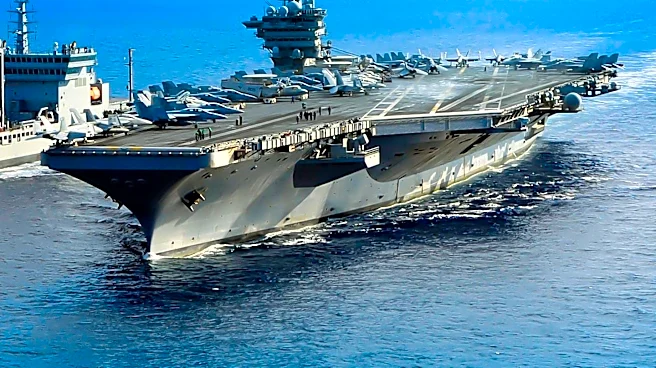
The ongoing conflict involving the US, Israel, and Iran is prompting Chinese policymakers to reassess their economic strategies. Despite the war's limited direct impact on China, economist Mao Zhenhua suggests that the situation could lead Beijing to focus
more on domestic economic challenges. The conflict's duration and potential to disrupt global markets are key concerns for China, which has so far managed to withstand the initial shocks better than many other economies. Mao emphasizes that while the impact on China remains relatively small, the war could still necessitate adjustments in Beijing's macroeconomic management to address internal issues more effectively.
Why It's Important?
China's response to the Iran conflict is crucial as it could influence global economic stability. As a major global economic player, China's policy adjustments can have far-reaching effects on international trade and economic relations. The conflict's potential to disrupt oil supplies and increase energy prices could also impact China's energy security and economic growth. Additionally, China's approach to managing external shocks and internal economic challenges could serve as a model for other countries facing similar issues. The situation underscores the interconnectedness of global economies and the need for strategic planning to mitigate the impact of geopolitical conflicts.
What's Next?
China is likely to continue monitoring the situation closely and may implement policy changes to strengthen its economic resilience. This could involve diversifying energy sources, enhancing domestic production capabilities, and increasing strategic reserves. The Chinese government may also engage in diplomatic efforts to stabilize the region and reduce the conflict's impact on global markets. As the situation evolves, China's economic strategies will be closely watched by international stakeholders, who may adjust their own policies in response to China's actions.