







What's Happening?
The U.S. Space Force has successfully completed a groundbreaking mission involving the interception of a private spacecraft by another private spacecraft in orbit. The mission, known as Victus Haze, was executed 11 hours ahead of its 72-hour deadline.
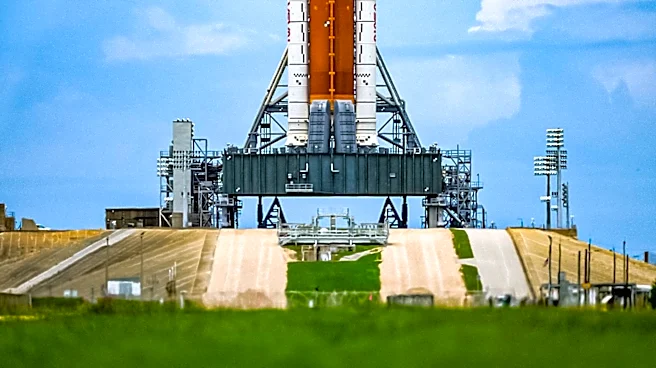
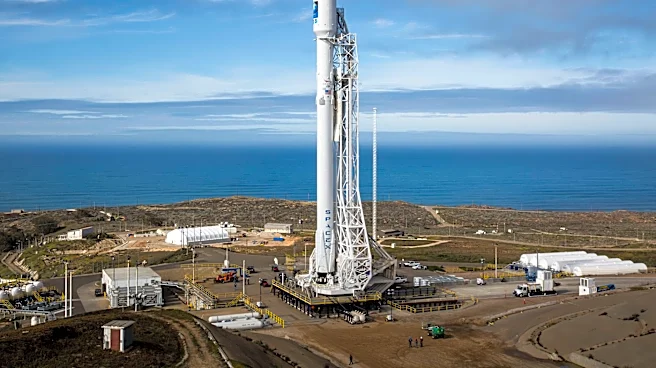
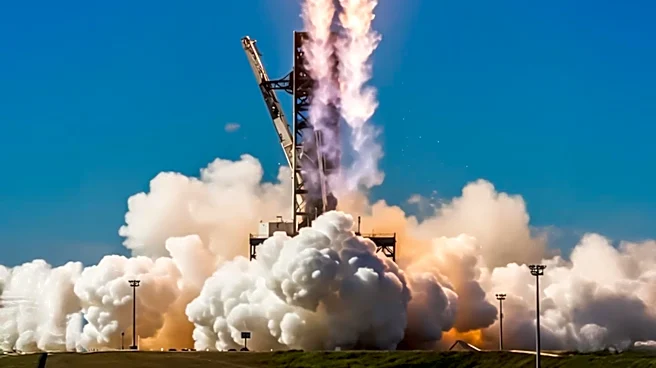
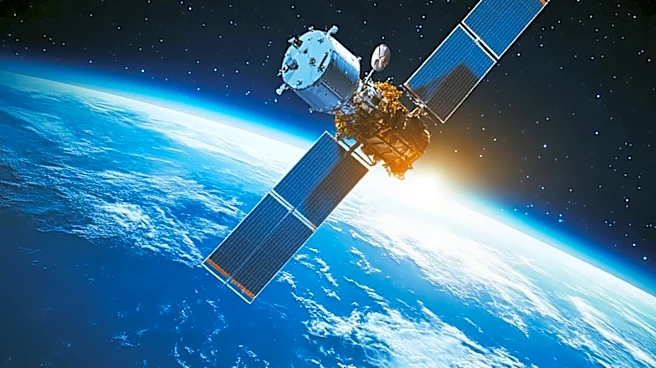
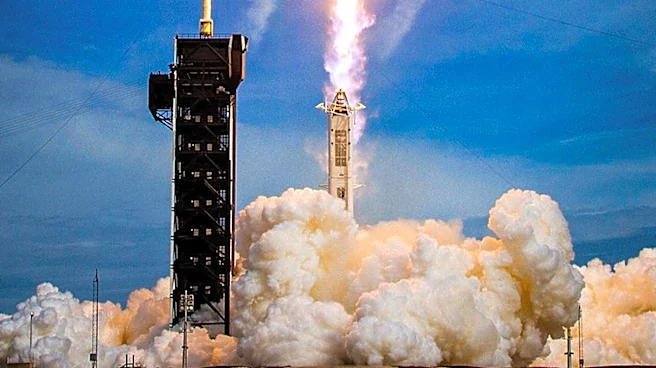
It involved the Jackal satellite from True Anomaly intercepting the Puma satellite from Rocket Lab. This exercise simulated a military scenario where an adversary spacecraft is intercepted, demonstrating the Space Force's capability to conduct such operations. The mission was notable for its use of private companies rather than state-owned spacecraft, marking a significant shift in how space operations are conducted. The Jackal satellite was launched aboard a SpaceX Falcon 9 rocket in May 2026, and the Puma satellite was launched by Rocket Lab just 16 hours and 42 minutes after receiving the launch notification, showcasing rapid deployment capabilities.
Why It's Important?
This mission underscores a significant evolution in military space operations, highlighting the increasing role of private companies in national defense. The ability to intercept and potentially neutralize adversary satellites is crucial for maintaining space security, especially as the number of non-cooperative satellites increases. This development could lead to a new defense market where private companies provide off-the-shelf solutions for military needs, reducing costs and timelines. For the U.S., this capability enhances national security by ensuring that space assets can be protected and adversarial threats can be neutralized swiftly. The mission also sets a precedent for future space operations, where private sector agility and innovation are leveraged for defense purposes.
What's Next?
The success of the Victus Haze mission suggests that future operations may involve more complex engagements, potentially including physical interactions with target satellites. This could lead to the development of a new generation of orbital combat ships, produced by private companies and equipped with autonomous software for maneuvering. As the demand for rapid launch capabilities grows, spaceports with strategic locations, such as those near the equator, may become increasingly valuable. This shift could also influence international space policy and defense strategies, as countries with space assets may need to reassess their security measures in light of these new capabilities.
Beyond the Headlines
The mission highlights the growing intersection of commercial and military interests in space. The use of private companies for military operations could lead to ethical and legal questions about the militarization of space and the role of private entities in national defense. Additionally, the rapid deployment capabilities demonstrated in this mission could influence global space race dynamics, as countries seek to enhance their own space security measures. The involvement of private companies also raises questions about the regulation and oversight of such operations, as well as the potential for increased competition in the space industry.