




What's Happening?
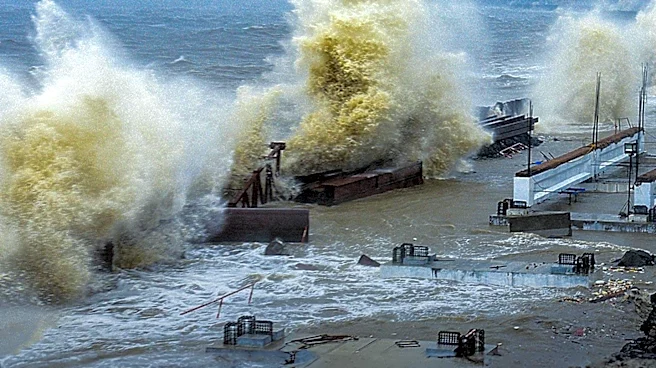
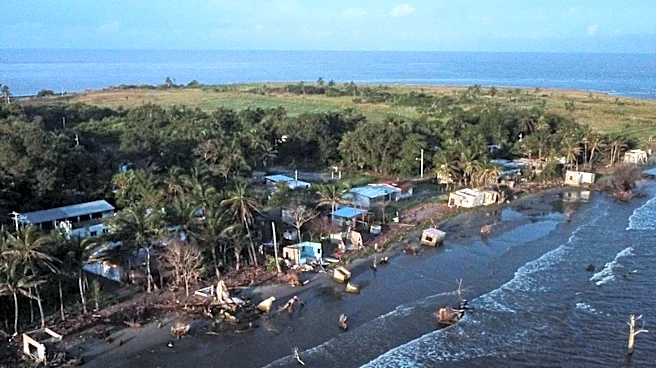
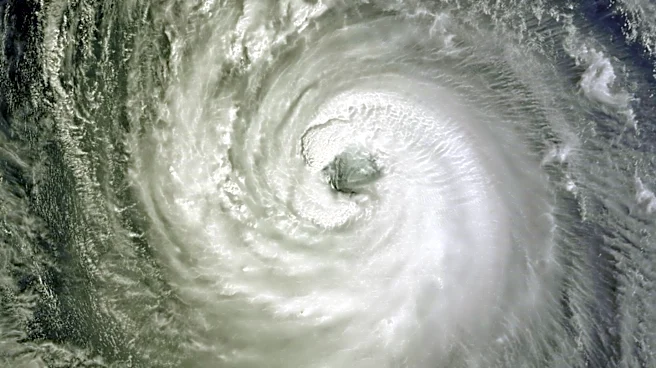
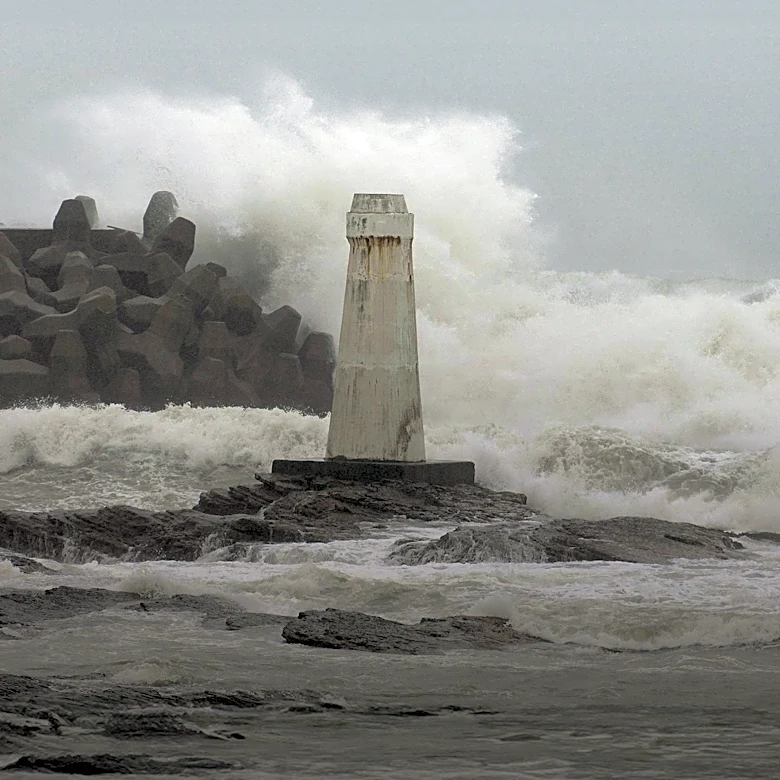
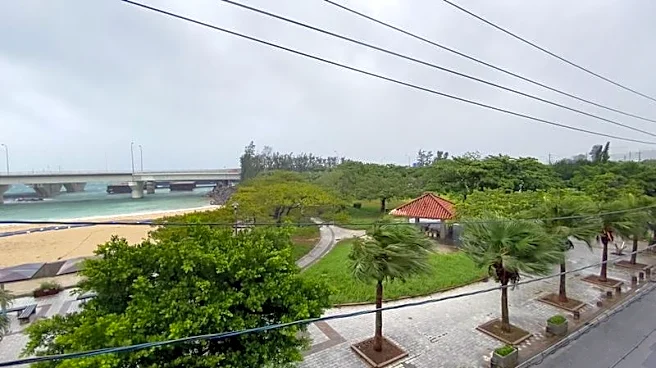
Typhoon Dolphin has swept across Okinawa Island in southern Japan, resulting in over 50,000 buildings losing power and injuring six people. The storm, with maximum sustained winds of 162 km/h and gusts reaching 216 km/h, has disrupted transportation,
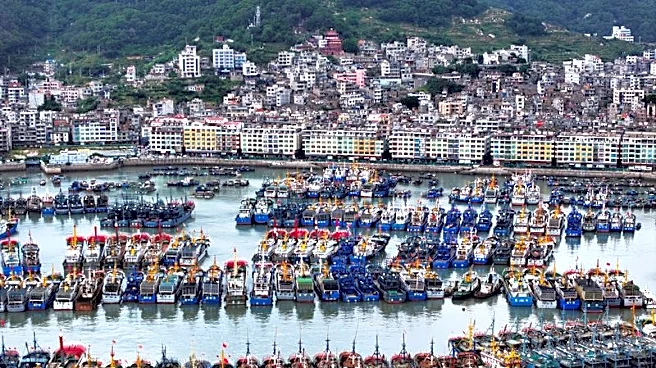
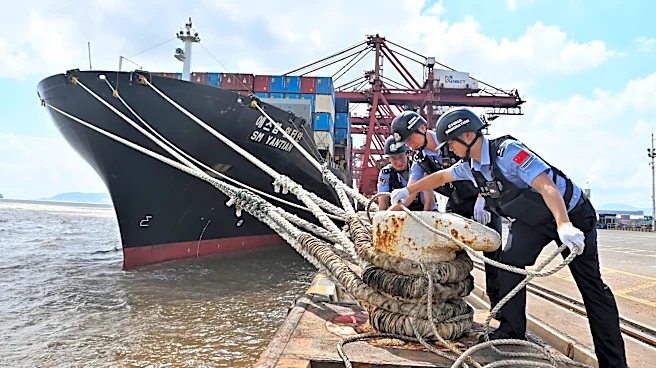
leading to the cancellation of flights by major Japanese airlines. Local authorities had previously ordered the evacuation of nearly 260,000 residents in Kagoshima and Okinawa due to the approaching typhoon. As the storm moves towards China, it is expected to weaken but has prompted Chinese authorities to raise their storm emergency response to Level III. The typhoon is forecasted to make landfall between Zhoushan, Zhejiang Province, and Fuding, Fujian Province, between late August 9th and early August 10th.
Why It's Important?
The impact of Typhoon Dolphin highlights the vulnerability of infrastructure and communities to severe weather events. The power outages and injuries in Japan underscore the need for robust emergency preparedness and response systems. As the storm approaches China, the heightened emergency response indicates the potential for significant disruption in affected areas, including the suspension of port operations and ferry services. The situation emphasizes the importance of international cooperation and preparedness in mitigating the effects of natural disasters, which can have widespread economic and social consequences.
What's Next?
As Typhoon Dolphin approaches China, authorities are likely to continue monitoring the storm's path and impact closely. Preparations are underway to minimize damage, including the closure of schools and tourist attractions in vulnerable areas. The response will likely involve coordinated efforts to ensure the safety of residents and the protection of critical infrastructure. The situation may prompt further discussions on improving disaster readiness and resilience in the face of increasingly frequent and severe weather events.