





What's Happening?
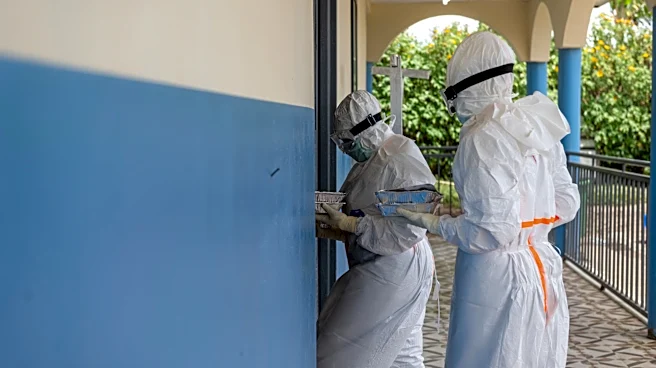
The World Health Organization (WHO) has reported a significant decrease in the number of suspected Ebola cases in the Democratic Republic of Congo. Initially, there were 906 suspected cases, but this number has been reduced to 116 after investigations
ruled out hundreds of cases. The outbreak, which involves the Bundibugyo strain of Ebola, has resulted in 321 confirmed cases, 48 deaths, and six recoveries. The Bundibugyo strain is challenging to detect with common tests, and there is no approved vaccine for it. The outbreak was declared a public health emergency of international concern by the WHO.
Why It's Important?
The reduction in suspected Ebola cases is a positive development in managing the outbreak in Congo. This decrease alleviates some pressure on healthcare resources and reduces the potential for further spread. However, the presence of the Bundibugyo strain, which lacks an approved vaccine, poses ongoing challenges. The situation underscores the need for continued vigilance and international support to prevent the outbreak from escalating. The outbreak's management is crucial for regional stability and public health security, as unchecked spread could have broader implications for neighboring countries and global health.
What's Next?
Efforts will likely continue to focus on containment and treatment of confirmed cases, alongside ongoing surveillance to identify and manage new cases. The international community, including organizations like the WHO and the Africa Centres for Disease Control and Prevention, will play a critical role in supporting local health authorities. Research into effective vaccines and treatments for the Bundibugyo strain may also be prioritized to prevent future outbreaks.