
What's Happening?
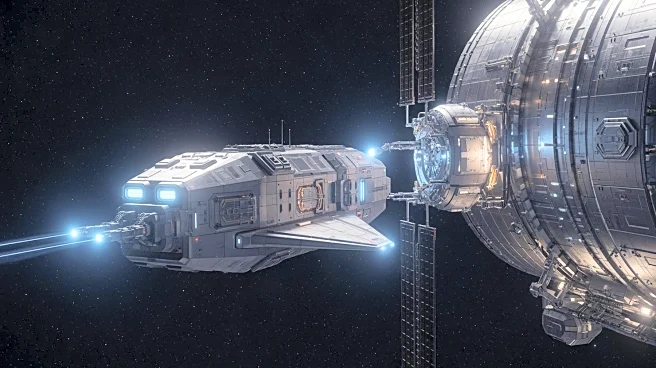
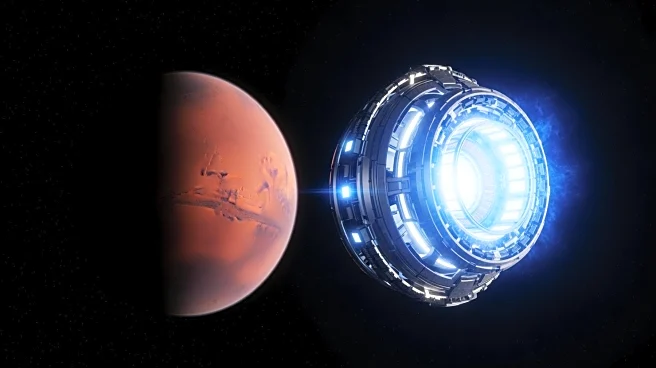
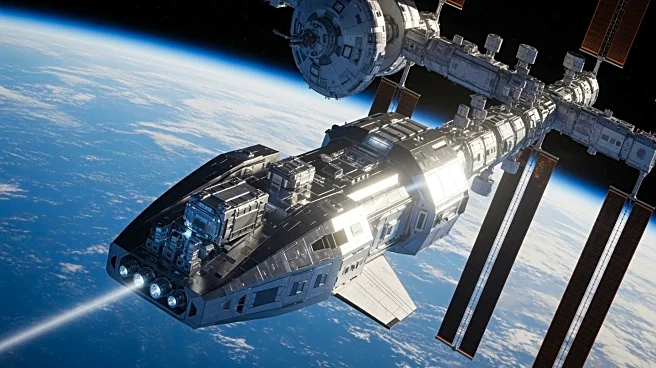
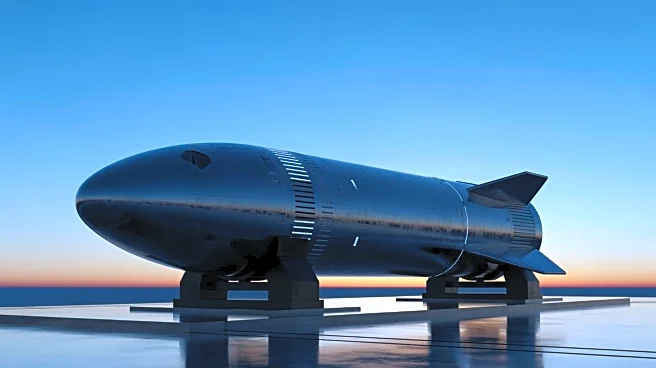
NASA has announced plans for the Space Reactor-1 Freedom mission, a nuclear-powered spacecraft set to launch to Mars in December 2028. The mission will utilize existing Lunar Gateway hardware to demonstrate nuclear electric propulsion, marking the first
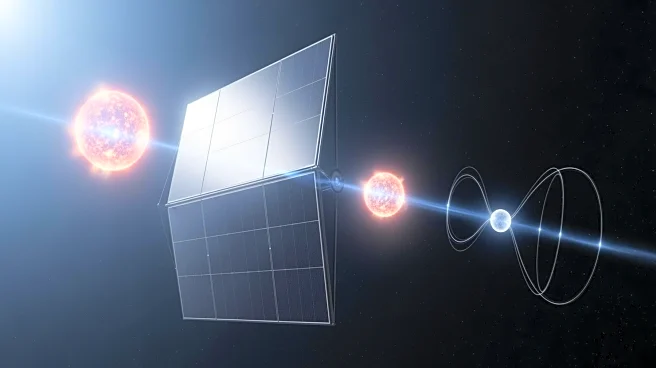
nuclear-propelled spacecraft to leave Earth's sphere of influence. The spacecraft will feature a 20-plus kilowatt fission reactor, using High-Assay Low-Enriched Uranium and Uranium Dioxide, to power xenon ion thrusters. This mission aims to showcase the use of nuclear fission in space, with the spacecraft carrying multiple Ingenuity-class helicopters to explore Mars. The mission is part of NASA's broader strategy to prepare for future high-power, long-duration missions.
Why It's Important?
The Space Reactor-1 Freedom mission represents a significant advancement in space exploration technology, particularly in the use of nuclear electric propulsion. This technology could revolutionize space travel by providing more efficient and powerful propulsion systems, enabling longer and more ambitious missions. The mission's success could pave the way for future missions to the Moon and Mars, potentially supporting human exploration and settlement. Additionally, the mission's use of existing hardware demonstrates cost-effective strategies in space exploration, which could influence future NASA projects and collaborations with commercial space entities.
What's Next?
Following the launch in December 2028, the spacecraft will deploy its solar arrays and activate its fission reactor within 48 hours. The mission will conduct Mars-relevant science and transmit data back to Earth, with the spacecraft expected to arrive near Mars about a year after launch. NASA plans to use the mission as a pathfinder for future projects, including potential lunar missions. The success of this mission could lead to the development of larger reactors for more powerful missions, influencing the future of space exploration and international collaborations.