




What's Happening?
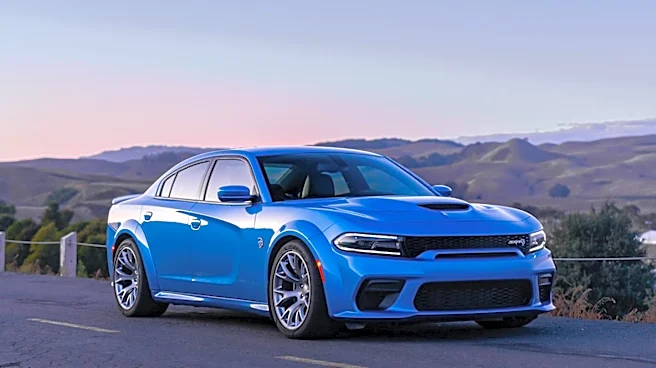
Dodge Law has unveiled a prototype of its 2027 Charger Police Pursuit Vehicle (PPV), signaling the return of the Charger to law enforcement fleets. The new police car will feature standard all-wheel drive and a turbocharged 3.0-liter inline-six Hurricane
engine. This development comes after the seventh-generation Dodge Charger concluded its production run. The prototype was showcased to law-enforcement fleet professionals in Daytona. The reintroduction of a police-specification sedan is notable, especially as many police forces have transitioned to SUVs like the Ford Explorer for pursuit vehicles due to their greater cargo capacity. The Charger PPV's hatchback design aims to offer more flexibility for carrying communication equipment, first-aid supplies, and other gear compared to older sedan models. While specific details on the engine's output are not yet available, it is anticipated that the police version will prioritize fuel efficiency and regular octane fuel over the high-output variants available in civilian models.
Why It's Important?
The return of the Dodge Charger PPV is significant for the U.S. law enforcement vehicle market. For years, the Charger was a prominent choice for police departments, and its absence created a gap that was largely filled by SUVs. This new offering provides police forces with a dedicated sedan option, which could appeal to departments that prefer the driving dynamics or traditional aesthetics of a sedan for patrol and pursuit. The standard all-wheel drive will enhance the vehicle's performance in diverse weather conditions across various U.S. regions, improving safety and operational effectiveness for officers. The use of a turbocharged six-cylinder engine, rather than a V-8, reflects a broader industry trend towards more fuel-efficient powertrains, which can lead to cost savings for municipal budgets in terms of fuel consumption and potentially maintenance. This move by Dodge could also intensify competition in the law enforcement vehicle sector, potentially driving innovation and offering more specialized options for police departments nationwide.
What's Next?
The Dodge Charger PPV is expected to be available to law enforcement agencies by 2027. Before its full deployment, the vehicle will undergo rigorous testing to meet various enforcement requirements, including specifications for equipment racking and ergonomics. These tests will ensure the vehicle can effectively accommodate police-specific gear and provide comfort for officers wearing utility belts, which often necessitates specialized seat designs with minimal lateral bolstering. Dodge will likely continue to engage with fleet managers and law enforcement professionals to refine the vehicle based on feedback and operational needs. The success of the Charger PPV will depend on its ability to balance performance, durability, and cost-effectiveness against the growing popularity of police SUVs. Its re-entry into the market could prompt other manufacturers to re-evaluate their offerings for law enforcement, potentially leading to a more diverse range of police-specific vehicles in the coming years.
Beyond the Headlines
The reintroduction of the Charger PPV highlights a nuanced shift in the automotive industry's approach to specialized government fleets. While the general consumer market has heavily favored SUVs and crossovers, the specific demands of law enforcement, such as high-speed pursuit capabilities and the need for robust, purpose-built vehicles, continue to create a niche for performance sedans. The decision to equip the PPV with a turbocharged six-cylinder engine instead of a V-8 also reflects evolving environmental and economic considerations, even within the context of police vehicles. This move could set a precedent for future law enforcement vehicle development, emphasizing efficiency and advanced engineering while maintaining the necessary power and reliability. Furthermore, the psychological impact of a recognizable police vehicle like the Charger on public perception and driver behavior, often associated with authority and speed, will likely be a subtle but significant aspect of its return to patrol duties.