



What's Happening?
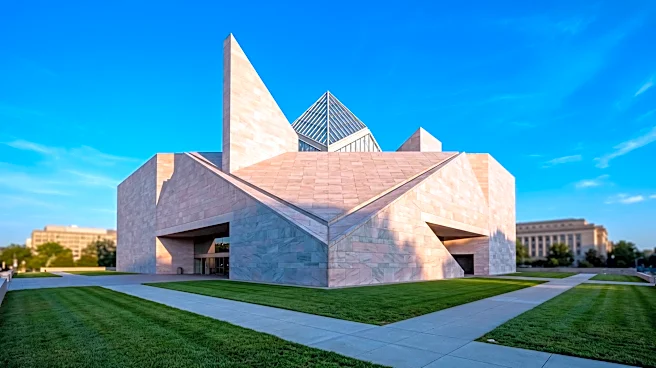
The National Gallery of Art in Washington, D.C., serves as a significant cultural institution, providing free access to art, creativity, and shared humanity for all visitors. Located at 6th and Constitution Ave NW, Washington, D.C. 20565, the gallery
operates from 10:00 a.m. to 5:00 p.m. It encompasses the West Building, East Building, and Sculpture Garden, offering a wide array of artistic experiences. The gallery's mission emphasizes welcoming the public to explore its extensive collections, which include notable works such as Mary Stevenson Cassatt's 'Portrait of an Elderly Lady.' Beyond its permanent collections, the National Gallery of Art hosts various educational resources, exhibitions, and events, including activities specifically designed for children and guided tours, aiming to engage a diverse audience in the appreciation of art.
Why It's Important?
The National Gallery of Art's commitment to free admission makes it an accessible cultural hub, fostering art appreciation and education across all socioeconomic backgrounds. This accessibility is crucial for promoting cultural literacy and engagement within the U.S. population. By offering diverse exhibitions and educational programs, including those tailored for children, the gallery plays a vital role in nurturing future generations' interest in the arts and humanities. Its extensive collection, featuring significant American and international artworks, contributes to the national cultural heritage and provides a platform for understanding different artistic traditions and historical contexts. The gallery's presence in the nation's capital also positions it as a key institution for cultural diplomacy and exchange, reflecting the U.S.'s dedication to the arts.
What's Next?
The National Gallery of Art is expected to continue its mission of providing free access to art and cultural experiences. Future plans likely include the rotation of new exhibitions, the development of additional educational programs, and potentially collaborations with other cultural institutions to broaden its reach and offerings. The gallery will also likely continue to acquire new artworks to enrich its permanent collection, ensuring its relevance and appeal to contemporary audiences. Ongoing efforts will focus on maintaining its facilities, including the West Building, East Building, and Sculpture Garden, to provide an optimal environment for visitors. The institution will also likely explore innovative ways to engage with the public, potentially through digital platforms, to extend its educational and cultural impact beyond its physical location.
Beyond the Headlines
The National Gallery of Art's role extends beyond simply displaying art; it acts as a civic space that encourages critical thinking, dialogue, and a deeper understanding of human expression. Its free admission policy challenges the notion of art as an exclusive commodity, positioning it instead as a public good essential for societal well-being. The gallery's diverse collection, spanning various periods and cultures, subtly promotes cross-cultural understanding and empathy, highlighting shared human experiences through artistic creation. Furthermore, its educational initiatives contribute to the development of visual literacy, a crucial skill in an increasingly image-saturated world. The institution's long-term impact lies in its ability to inspire creativity, foster intellectual curiosity, and serve as a sanctuary for reflection and aesthetic appreciation in the heart of the nation's capital.