

What's Happening?
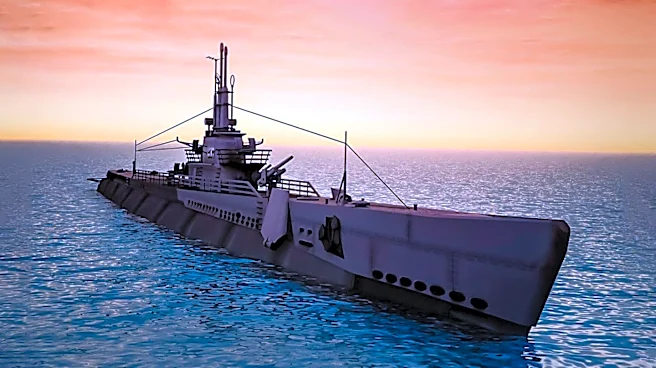
Australia is set to establish a Submarine Rotational Force-West (SRF-West) at HMAS Stirling on Cockburn Sound, which will host a rotational presence of one UK and up to four U.S. conventionally armed, nuclear-powered submarines starting as early as 2027.
This initiative is part of the AUKUS alliance, aiming to build Australia's capacity for its own future nuclear-powered submarines from the early 2030s. Major infrastructure works are planned to support these rotational submarines. The Australian government announced additional implementation steps in June, including the establishment of Naval Support Activity Stirling to provide support for U.S. personnel, contractors, and their families. This arrangement is designed to allow visiting forces to maintain discipline, family support, logistics, and command arrangements while operating in partnership with Australia.
Why It's Important?
This development is significant for U.S. strategic interests in the Indo-Pacific region. The rotational deployment of U.S. nuclear-powered submarines to Australia enhances the U.S. Navy's forward presence and operational flexibility, contributing to regional deterrence and stability. It also deepens the interoperability between the U.S., UK, and Australian navies, strengthening the AUKUS alliance as a cornerstone of security cooperation. For the U.S., this arrangement provides a critical strategic outpost in a geopolitically vital area, allowing for more rapid response capabilities and sustained presence without the complexities of establishing a permanent base. This move is expected to be viewed by potential adversaries as a significant enhancement of allied military capabilities, potentially influencing regional power dynamics and security calculations. The investment in infrastructure and support for U.S. personnel also signifies a long-term commitment to this strategic partnership.
What's Next?
The establishment of SRF-West at HMAS Stirling will involve ongoing infrastructure development and logistical preparations to accommodate the rotational presence of U.S. and UK submarines. The focus will be on building the necessary operational, maintenance, regulatory, and stewardship capacities for Australia's own future nuclear-powered submarines. This phased approach suggests a gradual increase in the complexity and scale of operations at HMAS Stirling. Future steps will likely include continued training and exercises to enhance interoperability among the three navies, as well as further integration of support services for personnel. The long-term goal is to ensure Australia's capability to operate its own nuclear-powered submarines, making the SRF-West a crucial stepping stone in this broader strategic objective. The success of this initiative will depend on sustained political will and financial investment from all three AUKUS partners.
Beyond the Headlines
Beyond the immediate military implications, the rotational presence of U.S. and UK nuclear-powered submarines in Australia represents a profound shift in regional security architecture. It signals a clear commitment by the AUKUS partners to counter emerging threats and maintain a balance of power in the Indo-Pacific. This move could also set a precedent for similar defense cooperation models in other strategic regions, where rotational deployments offer a flexible alternative to permanent basing. The historical context of Fremantle serving as a major submarine base during World War II underscores the strategic importance of Australia's west coast, suggesting that this current development is a modernization of a long-standing strategic insight rather than an entirely novel approach. The ethical and legal dimensions of nuclear-powered submarines, even if conventionally armed, will also remain a subject of international scrutiny and debate, particularly concerning non-proliferation norms and regional environmental concerns.