


What's Happening?
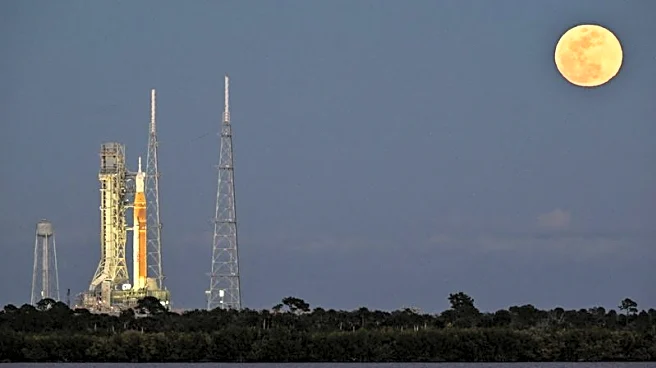
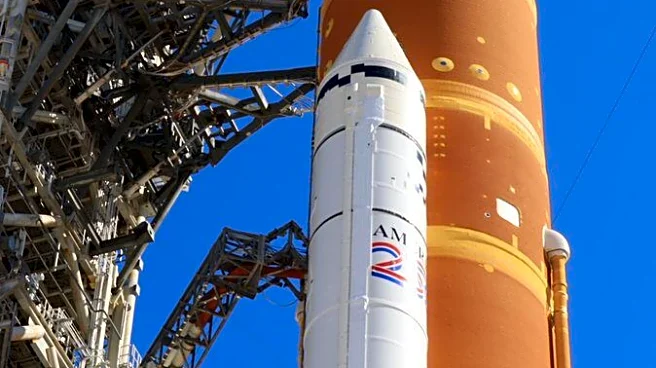
NASA has announced March 6 as the target date for the Artemis II mission, which will send four astronauts around the Moon. This decision follows a successful 50-hour wet dress rehearsal, where the Space Launch System rocket was fueled without encountering
the hydrogen leaks that affected previous tests. The rehearsal was a comprehensive simulation of the launch-day countdown, and its success marks a significant milestone in the mission's preparation. However, NASA officials caution that additional work, including testing the rocket's flight termination system and conducting a Flight Readiness Review, could affect the launch schedule.
Why It's Important?
The Artemis II mission is a pivotal step in NASA's Artemis program, which aims to return humans to the Moon and establish a sustainable presence there. The mission will test the systems and procedures necessary for future lunar exploration, including the Artemis III mission, which plans to land astronauts on the Moon. The success of Artemis II is crucial for maintaining the program's timeline and demonstrating the capabilities of the Space Launch System and Orion spacecraft. It also represents a significant achievement in overcoming technical challenges, such as the hydrogen leaks that previously hindered progress.
What's Next?
NASA will continue with final preparations, including testing the rocket's flight termination system and conducting a Flight Readiness Review. These steps are essential to ensure the mission's success and address any remaining technical issues. The outcome of these preparations will determine whether the March 6 launch date can be maintained or if adjustments are necessary. The mission's success will pave the way for future Artemis missions and the broader goal of lunar exploration.