
What's Happening?
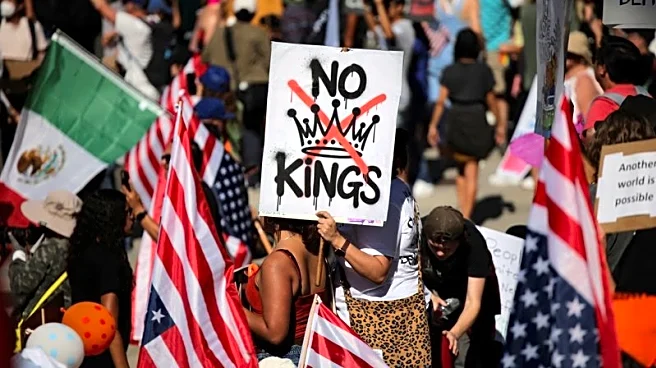
As millions prepare to participate in 'No Kings' protests against President Trump's administration, concerns are being raised about the safety of sharing photos and videos from these events. Experts warn that images shared on social media can inadvertently
expose individuals to risks, especially immigrants who may be monitored by law enforcement. The American Civil Liberties Union advises protestors to be cautious about capturing identifiable details in their photos. Despite the legal right to record in public spaces, the potential for surveillance and data misuse remains a significant concern, particularly for vulnerable communities.
Why It's Important?
The issue highlights the intersection of digital rights, privacy, and civil liberties in the context of political protests. As technology enables widespread sharing of information, it also increases the risk of surveillance and data exploitation. This situation underscores the need for stronger legal protections against unauthorized data use and highlights the challenges faced by marginalized groups in exercising their rights. The debate over privacy and security at protests reflects broader societal tensions regarding freedom of expression and government oversight.
What's Next?
Participants in the 'No Kings' protests are encouraged to adopt digital safety practices, such as blurring faces in photos and securing their devices. Advocacy groups may push for enhanced legal protections to safeguard protestors' privacy. The ongoing dialogue about digital rights and surveillance is likely to continue, with potential implications for policy changes and public awareness campaigns. As protests persist, the balance between visibility and safety will remain a critical consideration for activists and organizers.