




What's Happening?
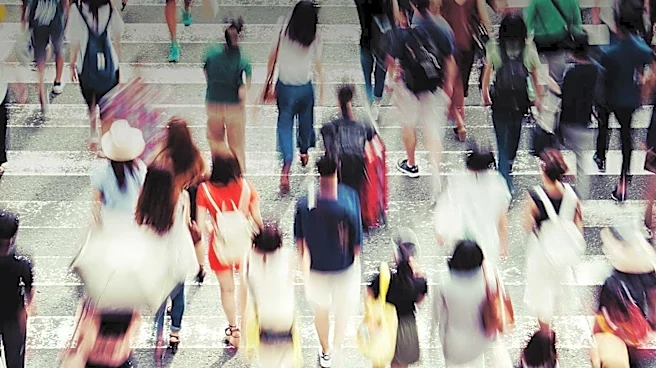
A five-year study initiated during the COVID-19 pandemic has uncovered a consistent, anticlockwise turning bias in human crowds. Researchers initially observed this phenomenon while studying how people move in enclosed spaces while maintaining social
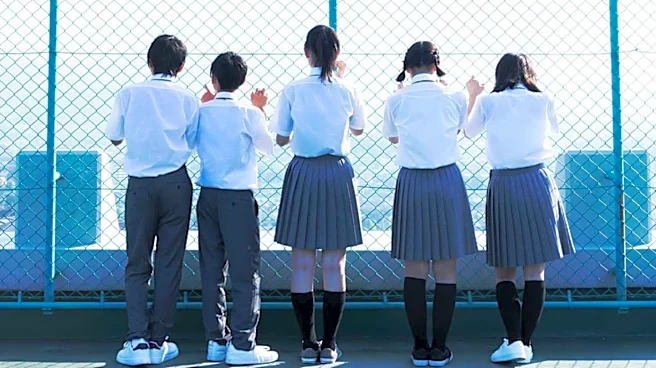
distancing. Despite initial hypotheses suggesting environmental factors like room walls or cultural influences such as driving side, experiments disproved these theories. Even in large open spaces without boundaries, the anticlockwise rotation persisted and even strengthened. A test conducted with a Japanese crowd, where people typically drive and step aside to the left, also resulted in an anticlockwise turn, contradicting the cultural hypothesis. The study further found that this tendency is present in individuals walking alone, suggesting an inherent, biomechanical or neurological bias rather than a collective emergent behavior. Even nursery school children exhibited this strong anticlockwise tendency.
Why It's Important?
This research challenges long-held assumptions in fields like urban planning, architecture, and crowd management, which often model collective human movement based on interactions between individuals. The finding that the anticlockwise bias originates at the individual level, rather than emerging from group dynamics, could lead to significant revisions in how public spaces are designed. Understanding this inherent bias can improve the flow of people in high-traffic areas such as airports, train stations, and museums, potentially reducing congestion and enhancing safety. The study's implications extend beyond human behavior, as similar leftward tilts have been observed in animal groups like schooling fish and army ants, suggesting a fundamental, ancient force influencing movement patterns across species. This deeper understanding of individual biomechanics could inform future research into human navigation and spatial cognition.
What's Next?
Future research will likely focus on identifying the precise individual-level mechanisms responsible for this anticlockwise bias. The study acknowledges that the exact reason for this individual bias remains unknown, despite ruling out factors like handedness, dominant foot, dominant eye, and sex. Further investigation into subtle asymmetries in the inner ear, which have been hinted at in studies of blindfolded walkers, could provide answers. The findings are expected to influence the development of more accurate predictive models for crowd behavior, which could be used to optimize the layout and design of public infrastructure. Architects and urban planners may begin to incorporate this inherent bias into their designs to create more intuitive and efficient pathways for pedestrians, potentially leading to smoother transitions and reduced bottlenecks in crowded environments.
Beyond the Headlines
The discovery of an inherent, individual bias in walking patterns raises profound questions about human autonomy and the subtle, often unconscious, forces that shape our daily movements. It suggests that what appears to be a free choice in navigation might be influenced by deep-seated biological or neurological predispositions. This could have philosophical implications regarding free will versus determinism in human behavior. Furthermore, the observation of similar biases in animal species hints at a universal principle of movement, potentially rooted in evolutionary advantages or fundamental physical laws. This cross-species commonality could open new avenues for interdisciplinary research, bridging biology, physics, and social sciences to understand collective and individual movement patterns on a more fundamental level. The study also underscores the importance of empirical observation in challenging established scientific assumptions, even in seemingly simple aspects of human behavior.