

What's Happening?
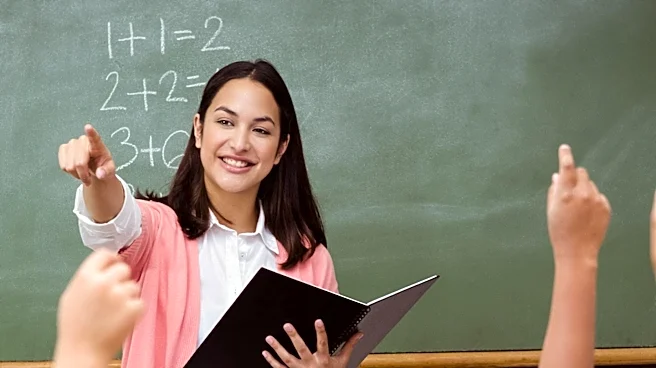
Educators are examining various methods to mitigate student anxiety associated with classroom participation, particularly during 'cold calling' scenarios. While some educators believe performance pressure can motivate students, others argue that the unpredictability
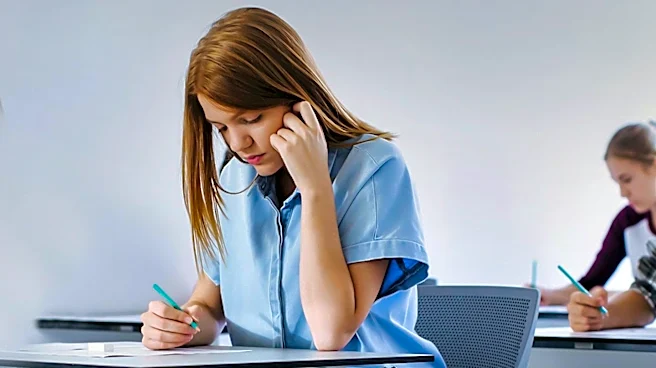
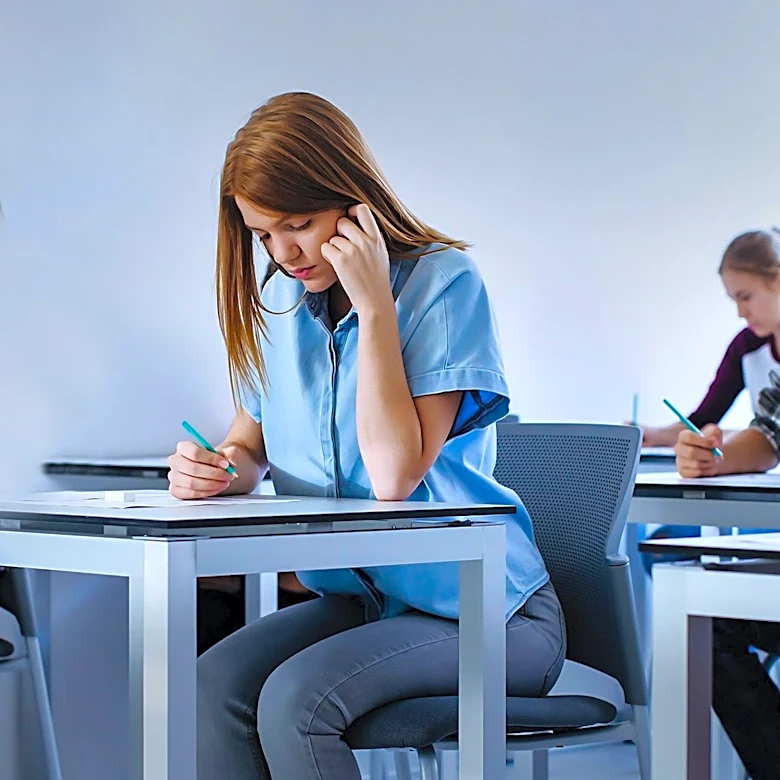
and fear of public embarrassment can hijack students' attention, diverting mental energy from reasoning to dread. A former valedictorian recounted significant distress from incorrect answers, leading to an inability to focus. Research suggests that giving students preparation time can reduce stress. Strategies being explored include emailing questions in advance, 'batched calling' where multiple students are named in speaking order, and providing 'hint cards.' Collaborative approaches like 'cold-call the table,' 'think-pair-share,' and 'vote-discuss-vote' are also being implemented to foster group-based responses and reduce individual pressure. These methods aim to preserve intellectual demands while minimizing social risks, creating a more supportive learning environment.
Why It's Important?
The discussion around reducing classroom anxiety is crucial for fostering inclusive and effective learning environments across U.S. schools. High anxiety levels can impede a student's ability to engage with material, participate in discussions, and ultimately, learn effectively. By implementing strategies that reduce the fear of public failure, educators can encourage broader participation, especially from shy or less confident students who might otherwise disengage. This shift can lead to more equitable classroom dynamics where all students feel empowered to contribute their ideas. Furthermore, addressing anxiety in the classroom aligns with broader mental health initiatives in education, recognizing the interconnectedness of emotional well-being and academic success. The adoption of these techniques could lead to improved student outcomes, enhanced critical thinking skills, and a more positive overall school experience, potentially impacting future academic and professional success.
What's Next?
The ongoing exploration and implementation of these varied classroom participation strategies are likely to continue evolving. Educators may further refine existing techniques and develop new ones based on student feedback and observed outcomes. Professional development programs for teachers could increasingly focus on anxiety-reducing pedagogical methods, equipping them with the tools to create more supportive learning spaces. Research into the psychological impacts of different teaching styles on student engagement and well-being is also expected to expand, providing more data-driven insights. Schools might adopt school-wide policies or recommendations for fostering a less anxiety-inducing classroom culture. The integration of technology could also play a role, offering anonymous participation options or tools for structured collaborative work, further diversifying how students can engage without undue pressure.
Beyond the Headlines
Beyond the immediate classroom benefits, the focus on reducing student anxiety in participation reflects a broader societal shift towards prioritizing mental well-being in educational settings. This movement challenges traditional pedagogical approaches that may inadvertently create stressful environments, pushing for a more empathetic and student-centered model. It also highlights the ethical responsibility of educators to create spaces where students feel safe to take intellectual risks without fear of humiliation. This shift could have long-term implications for how future generations approach learning, collaboration, and public speaking, potentially fostering greater confidence and resilience. Furthermore, it underscores the importance of understanding individual student needs and adapting teaching methods to accommodate diverse learning styles and emotional sensitivities, moving away from a one-size-fits-all approach to education.