



What's Happening?
As the midterm elections approach, two distinct visions for the United States are emerging, presented by President Trump and Democratic challengers. President Trump is campaigning on a platform that asserts his presidency as a historical success while
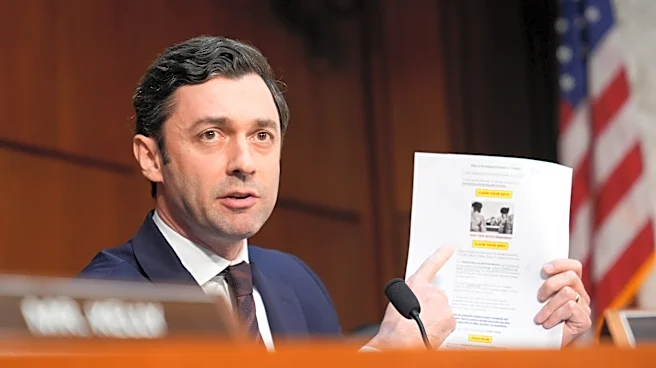
labeling Democrats as an unacceptable option, accusing them of wanting to turn the U.S. into a 'communist country' and declaring war on law enforcement. He has also downplayed the economic impact of the war with Iran, suggesting that higher gas prices are a worthwhile trade-off to prevent Iran from acquiring nuclear weapons. Conversely, Democrats, led by figures like Senator Jon Ossoff, are framing the election as a referendum on corruption, rising costs, and perceived failures in global leadership under President Trump. Ossoff specifically criticized President Trump for the increased cost of living and his handling of the war, contrasting it with the sacrifices of military personnel. The political landscape is marked by deep polarization, with both sides employing strong rhetoric to mobilize their bases.
Why It's Important?
The upcoming midterm elections are crucial as they will determine the future direction of U.S. policy and governance. President Trump's strategy of mobilizing his base with strong, often divisive rhetoric, aims to counter the historical trend of the incumbent party struggling in midterms. This approach, while potentially energizing his supporters, risks alienating independent and moderate voters in key states, which could be vital for his re-election prospects. For Democrats, the challenge lies in effectively channeling voter frustration over economic issues and the ongoing war into electoral gains. The internal ideological divisions within the Democratic party, particularly between progressives advocating for policies like Medicare for All and more moderate factions, could complicate their efforts to present a united front and appeal to a broad electorate. The outcome will significantly impact legislative priorities, economic policies, and the U.S.'s standing on the global stage, affecting industries, public services, and the daily lives of citizens.
What's Next?
In the immediate future, both parties will intensify their campaign efforts, with President Trump likely continuing his strategy of attacking Democrats and emphasizing his administration's perceived successes. Democrats will likely continue to focus on economic grievances and the perceived failures of President Trump's leadership, attempting to link Republican candidates to President Trump's record. The internal debates within the Democratic party regarding ideological stances, such as Medicare for All, will likely persist, potentially influencing candidate messaging and voter perception. The midterms will serve as a critical test of whether President Trump's base-mobilization strategy can overcome broader voter dissatisfaction and whether Democrats can effectively unify around a message that resonates with a diverse electorate. The results will set the stage for the next presidential election cycle, shaping political narratives and party strategies.
Beyond the Headlines
The current political climate reflects a deeper societal struggle over the identity and future of the United States. President Trump's rhetoric, which often labels opponents as 'communists' or 'anti-American,' highlights a growing trend of political demonization that can erode civil discourse and exacerbate national divisions. This approach, while effective in rallying a specific segment of the population, raises concerns about the long-term health of democratic institutions and the potential for increased social fragmentation. On the other hand, the Democratic focus on economic inequality and healthcare access points to persistent challenges within the U.S. economic system and social safety net. The internal ideological clashes within the Democratic party, particularly between progressive and moderate wings, underscore the evolving nature of the party's platform and its struggle to balance diverse interests. The outcome of these midterms will not only determine legislative control but also signal the prevailing values and priorities of the American electorate, influencing cultural norms and the national conversation for years to come.