
What's Happening?
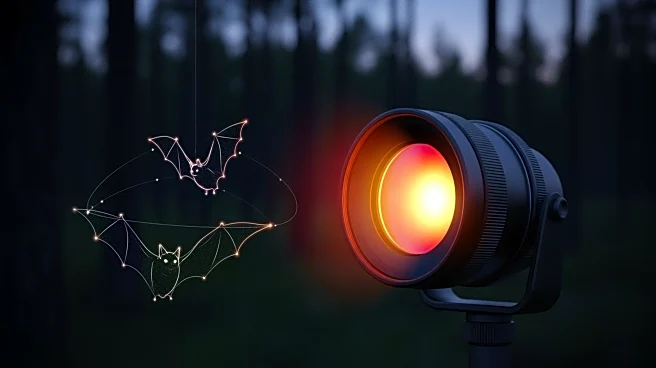
Focus Environmental Consultants, an environmental consultancy based in Worcestershire, has launched an innovative thermal camera system designed for the long-term and real-time monitoring of bat activity.
This development is supported by an Innovation Worcestershire grant and aims to improve data capture while reducing the need for on-site surveyors. The system, which can be mounted on trees or tripods, allows for continuous monitoring of bats emerging from roosts, thereby enhancing the quality of ecological evidence. The company, founded in 2010, provides ecological and arboricultural reports across England and Wales to support planning applications. This new technology is part of a broader growth initiative supported by Worcestershire Growth Hub, which has also facilitated the expansion of the company's night-vision and infrared survey equipment. Field testing of the system is currently underway.
Why It's Important?
The development of this thermal bat monitoring system is significant as it represents a step forward in wildlife conservation efforts, particularly in the protection of vulnerable bat species. By improving the accuracy and efficiency of bat activity monitoring, the system supports ecological research and conservation planning. This innovation not only aids in meeting planning and conservation requirements but also reduces human disturbance in natural habitats. The support from Worcestershire Growth Hub highlights the importance of targeted innovation funding in enabling local businesses to develop practical solutions with environmental benefits. This initiative could serve as a model for similar ecological projects, promoting sustainable development and wildlife protection.
What's Next?
As field testing of the thermal bat monitoring system progresses, Focus Environmental Consultants aims to refine the technology and expand its application across more regions. The company is likely to continue collaborating with software engineers and ecological experts to enhance the system's capabilities. Additionally, the success of this project may encourage further investment in similar ecological innovations. With the high demand for Innovation Worcestershire grants, other businesses in the region may seek similar support to develop environmentally beneficial technologies. The outcomes of this project could influence future conservation strategies and policies, potentially leading to broader adoption of advanced monitoring technologies in ecological research.