






What's Happening?
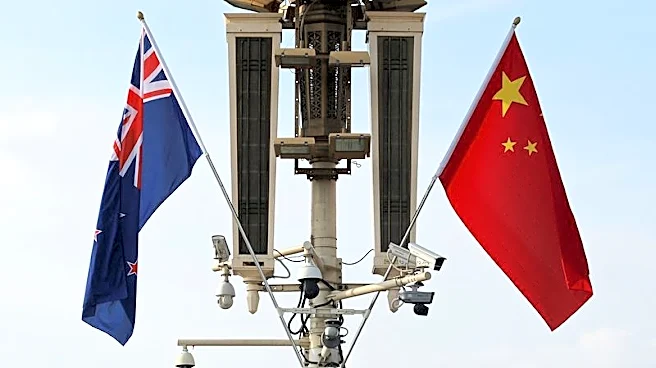
Tensions have escalated between China and New Zealand following accusations from the Chinese Ministry of Foreign Affairs that a Royal New Zealand Air Force P-8A Poseidon aircraft engaged in 'close-in reconnaissance' and 'harassment' in the Yellow Sea
and East China Sea. The incident reportedly disrupted civil aviation operations and affected China's security interests. The New Zealand Defence Force clarified that the aircraft was conducting maritime surveillance to monitor North Korean sanctions evasions, in line with UN Security Council Resolutions. The Chinese Ministry of Defense claimed that the aircraft disregarded warnings, prompting the People's Liberation Army to take 'professional and forceful measures.'
Why It's Important?
This incident underscores the growing geopolitical tensions in the Asia-Pacific region, particularly concerning military activities and surveillance operations. The accusations from China highlight the sensitive nature of military operations in contested areas, where multiple nations have strategic interests. The situation could impact diplomatic relations between China and New Zealand, as well as influence broader regional security dynamics. The involvement of UN sanctions on North Korea adds an international dimension, emphasizing the complexities of enforcing global security measures in politically sensitive regions.
What's Next?
Diplomatic discussions between China and New Zealand may be necessary to address the incident and prevent further escalation. Both countries might engage in dialogue to clarify their positions and ensure that future military operations do not lead to misunderstandings or conflicts. The international community, particularly countries involved in enforcing North Korean sanctions, will likely monitor the situation closely. The incident may also prompt discussions on the rules of engagement and protocols for military operations in international waters.