








What's Happening?
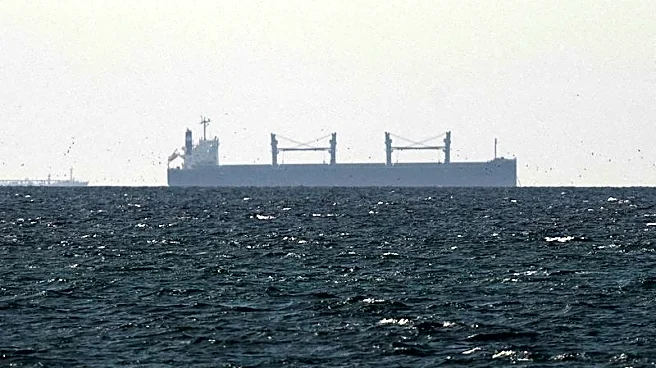
Brent crude oil prices have surged following President Trump's threats to attack ships laying mines in the Strait of Hormuz. This development comes amid ongoing tensions between the U.S. and Iran, with the U.S. Navy maintaining a blockade of Iranian trade
by sea. The situation has led to increased uncertainty in the global oil market, with Brent crude futures rising by $1.26 to $103.17 a barrel. The U.S. military has intercepted Iranian-flagged tankers in Asian waters, redirecting them away from strategic positions. Despite a ceasefire extension, the blockade remains, affecting the transit of ships through the strait, which is a critical passage for global oil supplies.
Why It's Important?
The Strait of Hormuz is a vital chokepoint for global oil transportation, carrying about 20% of the world's oil supply. The current tensions and blockades have significant implications for global energy security and oil prices. The disruption in the strait has led to increased oil prices, affecting economies worldwide. Countries reliant on oil imports are seeking alternative sources, which could lead to shifts in global trade patterns. The situation underscores the fragility of global energy supply chains and the potential for geopolitical conflicts to impact economic stability.
What's Next?
The continuation of the U.S. Navy blockade and the lack of a clear end date for the ceasefire suggest prolonged tensions. Stakeholders, including oil-importing nations and energy companies, will likely continue to seek alternative supply routes and sources. The situation may prompt further diplomatic efforts to resolve the conflict and ensure the free flow of oil through the Strait of Hormuz. The global oil market will remain volatile, with potential for further price increases if the situation escalates.