


What's Happening?
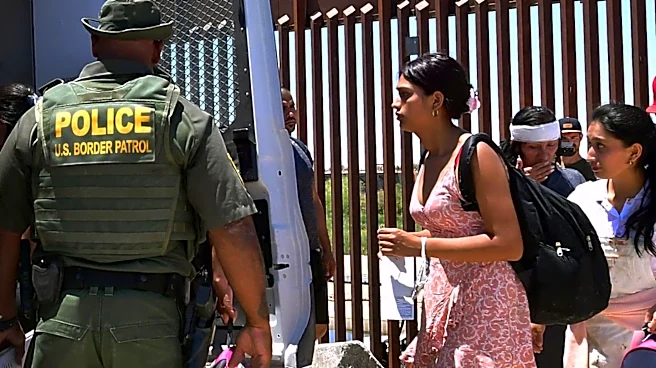
Immigrant families, workers, and legal assistance organizations have filed an emergency motion to enforce a federal court order that previously struck down the Trump-Vance administration’s 75-country ban on immigrant visas. This action comes in response
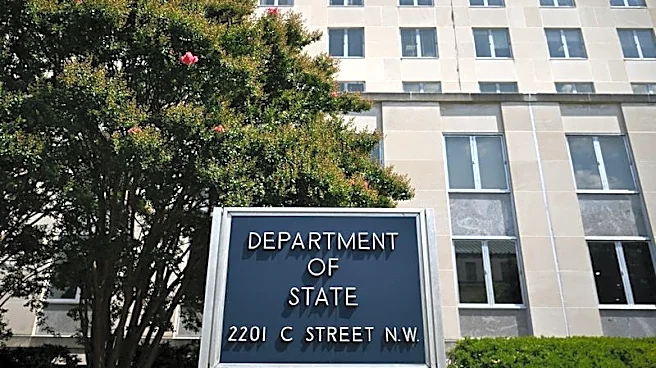
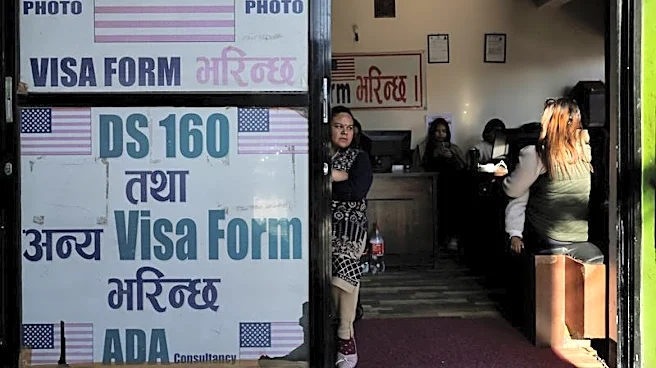
to reports that the U.S. State Department has issued a global 'pause' on immigrant visa appointments, citing a training program as the reason. The federal court's ruling on August 21, 2026, explicitly stated that the Secretary of State lacked the authority to suspend or pause visa processing. Advocacy groups, including CLINIC, African Communities Together, and individuals affected by the ban, argue that this new 'pause' is a deliberate attempt to circumvent the court's decision and continues to separate families and disrupt lives. They contend that the administration is ignoring a clear court order and enforcing unlawful policies under a different guise, which they believe is an abuse of power.
Why It's Important?
This legal challenge is significant as it directly confronts the U.S. government's actions regarding immigration policy and the enforcement of judicial rulings. If the State Department's 'pause' is allowed to stand, it could set a precedent for executive branches to sidestep court orders by re-labeling or re-framing policies that have been legally challenged and overturned. For immigrant communities, this situation prolongs uncertainty and separation, impacting family reunification and the ability of individuals to pursue legal immigration pathways. The outcome of this emergency motion will test the boundaries of executive power versus judicial oversight in immigration matters. It also highlights the ongoing tension between immigration enforcement and the rights of individuals seeking to enter the U.S. legally, with potential long-term implications for how immigration policies are implemented and challenged in the future.
What's Next?
The federal court will now consider the emergency motion filed by the immigrant advocacy groups. The court will need to determine if the State Department's global 'pause' on immigrant visa appointments constitutes non-compliance with its August 21, 2026, order. If the court agrees with the plaintiffs, it could issue further directives to compel the State Department to resume immigrant visa processing without delay. Major stakeholders, including the State Department, the Department of Homeland Security, and various immigrant rights organizations, will be closely watching the court's decision. The administration may face pressure to either justify its actions more thoroughly or to comply with the court's original ruling. The legal teams representing the plaintiffs are optimistic that the court will recognize the 'pause' as a form of non-compliance and intervene to ensure the processing of visas for affected families and workers.
Beyond the Headlines
This situation delves into deeper constitutional questions regarding the separation of powers and the executive branch's adherence to judicial mandates. The accusation that the administration is 'blatant[ly] attempt[ing] to sidestep the law' raises concerns about the integrity of the legal system and the potential for executive overreach. Beyond the immediate impact on visa applicants, this case could influence public trust in government institutions and the perception of fairness in immigration processes. It also underscores the ethical dimension of family separation and the human cost of bureaucratic delays and legal battles. The ongoing legal struggle reflects a broader societal debate about immigration policy, national security, and humanitarian considerations, with the court's decision potentially shaping future interactions between the executive and judicial branches on such sensitive issues.