




What's Happening?
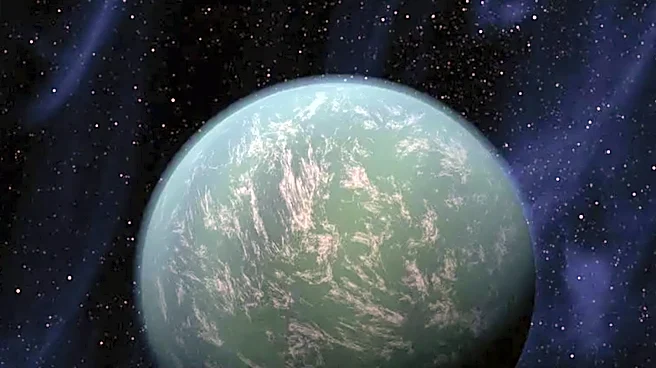
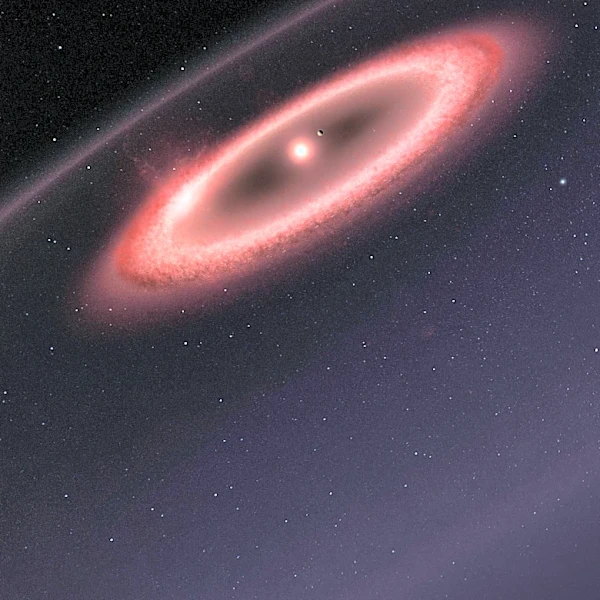
Astronomers are actively searching for a hypothetical 'Planet Nine' in the distant reaches of the Solar System, a quest that has evolved from earlier searches for 'Planet X.' The modern Planet Nine hypothesis, primarily advanced by California Institute
of Technology astronomers Konstantin Batygin and Michael Brown in 2016, suggests that an undiscovered planet could explain unusual orbital patterns observed among some extremely distant trans-Neptunian objects. Unlike the historical search for Planet X, which focused on irregularities in the orbits of Uranus and Neptune, the current hypothesis centers on the gravitational 'fingerprints' a massive planet would leave on smaller objects in the outer Solar System. Recent findings from 2024, also by Caltech researchers, specifically highlight objects with long orbital periods and low orbital inclinations, whose dynamic instability suggests a continuous replenishment, which Planet Nine could naturally produce. Despite indirect evidence, no direct detection of Planet Nine has been made.
Why It's Important?
The potential existence of Planet Nine has significant implications for our understanding of the Solar System's formation and evolution. If confirmed, it would represent a major addition to our planetary inventory and could explain several observed anomalies in the outer Solar System that currently lack a compelling alternative explanation. These anomalies include the clustering of orbits in particular directions, the extremely distant perihelia of some objects, bodies moving on retrograde orbits, and objects with highly inclined trajectories relative to the Solar System's usual orbital plane. The confirmation of Planet Nine would validate a new method of planetary discovery—inferring a planet's presence solely through its gravitational effects on other bodies, similar to the discovery of Neptune. This ongoing scientific endeavor pushes the boundaries of observational astronomy and theoretical modeling, challenging scientists to reconcile observed phenomena with existing cosmological frameworks.
What's Next?
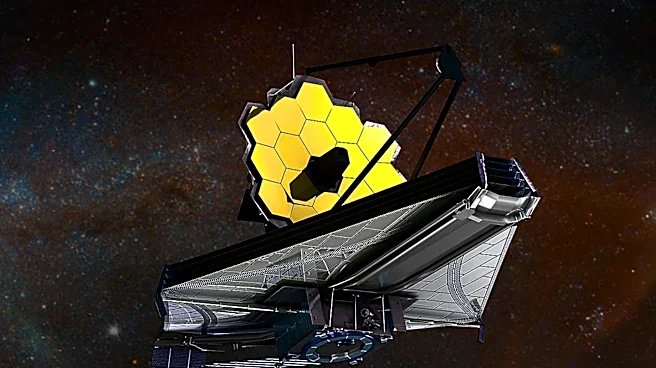
The hunt for Planet Nine is expected to intensify with the advent of new generations of telescopes. The Vera C. Rubin Observatory in Chile is particularly anticipated, as it is designed to survey the sky on an unprecedented scale and speed. This observatory is expected to reveal many more extremely distant objects in the Solar System, providing a much larger sample size for astronomers to analyze. With more data, scientists will be better positioned to determine whether the unusual orbital patterns are genuine gravitational effects of an unseen planet or merely the result of observational bias. Confirmation of the Planet Nine hypothesis will ultimately require direct detection of the object itself or independent evidence unequivocally demonstrating its effects. Until then, the hypothesis will continue to be tested against new observations and refined through ongoing research and modeling.
Beyond the Headlines
The enduring quest for Planet Nine reflects a fundamental human drive to explore and understand our cosmic neighborhood. The debate surrounding its existence, from the initial 'Planet X' theories to the modern 'Planet Nine' hypothesis, highlights the dynamic and self-correcting nature of scientific inquiry. The reclassification of Pluto as a dwarf planet in 2006, which sparked considerable public debate, underscores the evolving definitions and understanding of celestial bodies. The search for Planet Nine also touches upon the philosophical implications of what constitutes a 'planet' and how our understanding of the Solar System is constantly being refined. The ethical considerations involve the rigorous application of the scientific method, the careful interpretation of indirect evidence, and the transparent communication of scientific uncertainty to the public. This ongoing search is a testament to the scientific community's commitment to unraveling the universe's mysteries, even when direct evidence remains elusive.