







What's Happening?
Two Idaho hunting guides, Chad Kulow and Andrea Major, have pleaded guilty to leading illegal mountain lion hunts and were sentenced in federal court last week. They will not serve prison time but face significant financial penalties and hunting bans.
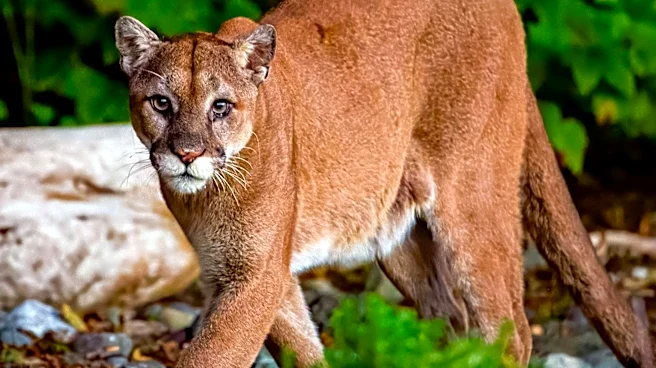
Kulow pleaded guilty to a felony Lacey Act violation, while Major pleaded guilty to a misdemeanor Lacey Act violation. The Lacey Act prohibits the interstate transportation or sale of illegally obtained wildlife. The couple, along with a third guide, Lavoy Eborn (to be sentenced in November), were indicted for operating hunts without the knowledge or permission of a licensed outfitter, which is required under Idaho law. Assistant U.S. Attorney Justin Paskett noted that the guides led hunts for a dozen mountain lions in Idaho and Wyoming, comparing their actions to poaching. U.S. District Judge B. Lynn Winmill sentenced Kulow and Major to five years of probation. Kulow must pay a $50,000 fine to the federal Lacy Fund and $20,000 in restitution to Idaho Fish and Game, while Major must pay a $30,000 fine and $15,000 in restitution. They also received hunting bans of five and four years, respectively.
Why It's Important?
This case highlights the serious consequences for illegal wildlife trafficking and the violation of hunting regulations, even when it doesn't result in prison time. The substantial fines and restitution payments underscore the financial penalties associated with such crimes, aiming to deter others from similar illegal activities. The Lacey Act is a critical federal tool for protecting wildlife across state lines, and its enforcement in this case sends a strong message about the importance of legal and ethical hunting practices. For Idaho's wildlife management and conservation efforts, the restitution to Idaho Fish and Game is crucial for supporting their work. The hunting bans imposed on Kulow and Major also serve as a significant deterrent, as hunting privileges are highly valued in Idaho. This ruling reinforces the legal framework designed to prevent poaching and ensure sustainable wildlife populations.
What's Next?
Chad Kulow and Andrea Major will begin their five-year probation periods and must comply with the terms of their sentences, including paying their fines and restitution. They will also be subject to their respective hunting bans. Lavoy Eborn, the third guide involved, is scheduled to be sentenced in November, and his outcome will likely be influenced by the precedent set in Kulow and Major's cases. This case may prompt increased scrutiny of hunting guide operations in Idaho and Wyoming to ensure compliance with state and federal regulations. Wildlife agencies may also use this case as an example in educational outreach to hunters and guides about the importance of adhering to licensing and ethical guidelines.
Beyond the Headlines
U.S. District Judge B. Lynn Winmill characterized these offenses as 'camouflage-collar crime,' drawing a parallel to white-collar crime but within the context of outdoor activities. This term highlights that illegal activities for profit can occur in various sectors, not just corporate environments. The judge's decision to impose lengthy hunting bans instead of prison time reflects a nuanced understanding of the impact of such penalties on individuals whose livelihoods and lifestyles are deeply intertwined with hunting. For many in Idaho, the loss of hunting privileges is a profound punishment. This case also touches on the broader ethical considerations within the hunting community, where legal and ethical conduct is often emphasized as crucial for the sport's reputation and the conservation of wildlife. The use of a licensed outfitter's name in mortality reports without their knowledge also points to issues of fraud and misrepresentation within the industry.