




What's Happening?
U.S. Representative Sylvia Garcia has publicly stated that "ICE is out of control" and demanded answers and the release of body camera footage after an ICE agent shot Wilber Rafael Garces Perez in North Austin. This incident has sparked anger and calls
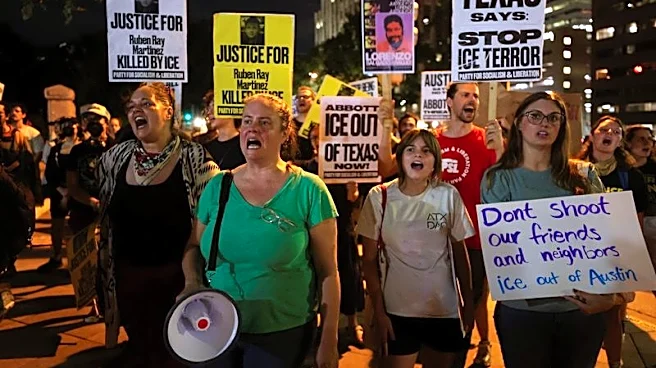
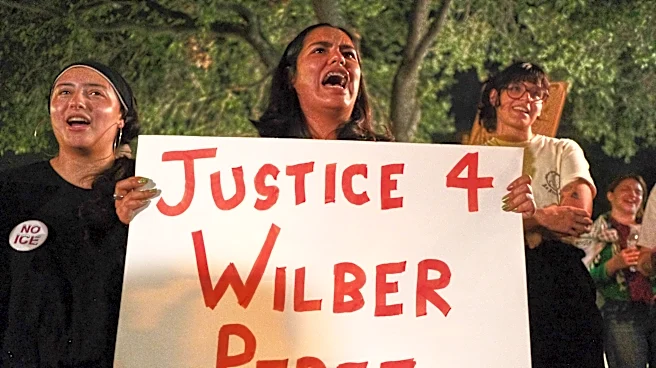
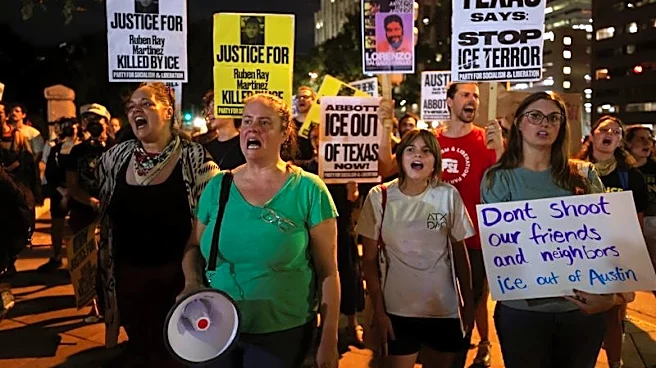
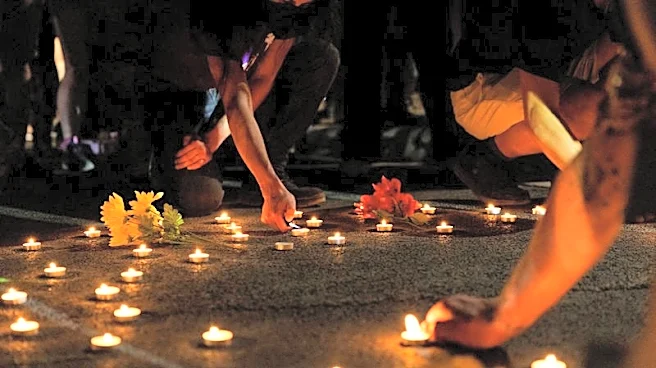
for accountability, leading to planned student walkouts in Central Texas and demonstrations at the Texas Capitol. State Representative James Talarico also highlighted that Garces Perez had no criminal record and was shot by an ICE agent, subsequently sleeping on a prison cell floor with a bullet still in his back. The national president of LULAC, Roman Palomares, has called for independent oversight, urging Congress to establish a body outside of DHS, ICE, and the Department of Justice with the authority to investigate all uses of force by immigration agents. Protests have occurred for two consecutive nights, with some leading to minor injuries for police officers and arrests.
Why It's Important?
This event underscores significant tensions surrounding immigration enforcement and accountability in the United States. Representative Garcia's strong condemnation and demand for transparency reflect a broader public and political concern regarding the actions of federal agencies like ICE. The calls for independent oversight highlight a perceived lack of impartial investigation into incidents involving immigration agents, which could lead to legislative efforts to reform accountability mechanisms. The student walkouts and protests indicate a growing civic engagement and dissatisfaction among the public, particularly youth, regarding these issues. The incident also brings to the forefront the debate over the scope of ICE's operations and the rights of individuals, especially those without criminal records, during enforcement actions. The involvement of multiple political figures and civil rights organizations suggests that this incident could become a focal point for discussions on immigration policy and law enforcement practices at both state and federal levels.
What's Next?
The immediate next steps will likely involve continued pressure from Representative Garcia and other political figures for the release of body camera footage and a transparent investigation into the shooting of Wilber Rafael Garces Perez. Student walkouts and protests are expected to continue, maintaining public attention on the issue. Civil rights organizations, such as LULAC, will likely intensify their advocacy for independent oversight of immigration agents, potentially leading to proposals for new legislative bodies or reforms in how use-of-force incidents are investigated. The incident could also prompt further discussions within Congress regarding ICE's operational protocols and accountability structures. Depending on the findings of any investigation and the public response, there could be legal challenges or policy changes aimed at addressing concerns about immigration enforcement practices and ensuring greater transparency and accountability.
Beyond the Headlines
The incident in Austin, and Representative Garcia's response, touches upon deeper societal and ethical questions regarding the balance between national security, immigration enforcement, and individual civil liberties. The demand for body camera footage reflects a broader societal push for transparency in law enforcement, driven by a desire to hold agents accountable and build public trust. The calls for independent oversight suggest a systemic distrust in internal investigations, raising questions about the impartiality and effectiveness of current accountability mechanisms within federal agencies. This event could also exacerbate existing political polarization around immigration, potentially fueling debates about the role of federal agencies in local communities and the extent of their authority. The involvement of students in protests highlights a generational concern for social justice and human rights, indicating a potential long-term shift in public engagement with these issues. Ultimately, this incident could serve as a catalyst for re-evaluating the ethical frameworks governing immigration enforcement and the mechanisms in place to protect vulnerable populations.