

What's Happening?
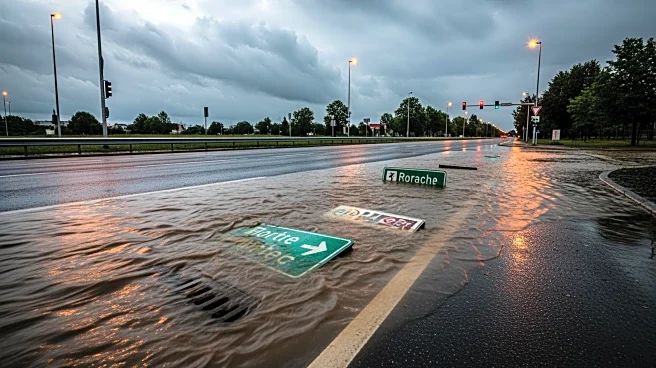
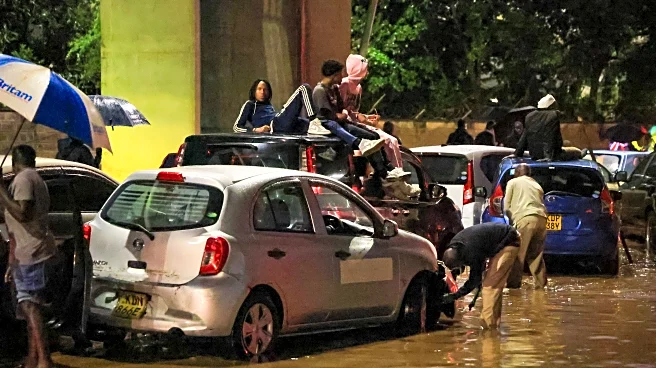
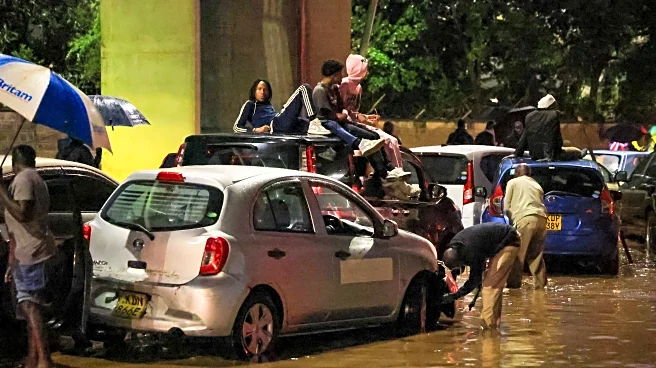
At least 25 people have died following severe flash flooding in Nairobi, Kenya. The heavy rains, which began on Friday, have caused significant disruption, including the stranding of motorists and the diversion of flights from Nairobi to Mombasa. The flooding has
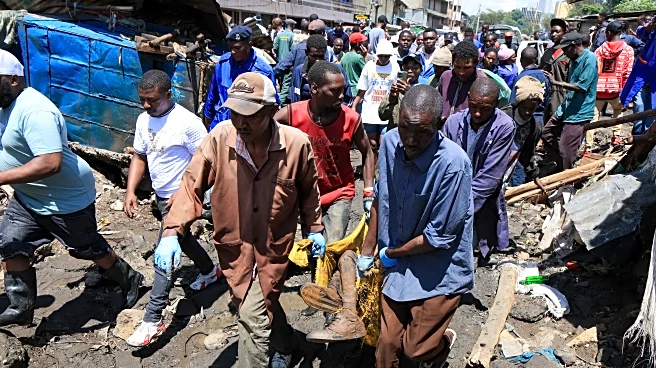
been exacerbated by poor drainage infrastructure, leading to submerged vehicles and stranded residents. In response, President William Ruto has deployed a multi-agency team to assist those in danger and has pledged to cover hospital bills for affected individuals. The military has been called in to support emergency services, and the Kenya Red Cross is actively involved in rescue operations. The situation remains critical as search and rescue efforts continue, with authorities warning that the death toll may rise.
Why It's Important?
The flash floods in Nairobi highlight the vulnerability of urban areas to extreme weather events, which are becoming more frequent due to climate change. The incident underscores the urgent need for improved infrastructure and disaster preparedness in Kenya's capital. The disruption of flights and damage to over 100 vehicles also illustrate the economic impact of such natural disasters, affecting both local and international travel and commerce. The government's response, including the deployment of military and emergency services, reflects the severity of the situation and the need for coordinated efforts to mitigate the impact on affected communities. This event serves as a reminder of the broader challenges faced by East African nations in adapting to climate change and protecting their populations.
What's Next?
As the rains continue, the Kenyan government is focused on clearing blocked drainage systems to prevent further flooding. Public Service Minister Geoffrey Ruku is coordinating national disaster preparedness and response efforts, urging residents to prioritize safety. The government has committed to distributing relief food to affected families and ensuring that all drainage systems are functional. The ongoing rescue operations by the military and Kenya Red Cross are expected to continue as authorities work to reach those still stranded. The situation remains fluid, with potential for further disruptions if the rains persist.
Beyond the Headlines
The flooding in Nairobi raises questions about urban planning and infrastructure development in rapidly growing cities. The lack of adequate drainage systems has been a recurring issue, with residents expressing frustration over the government's failure to address these problems. This event may prompt a reevaluation of urban policies and investment in infrastructure to better prepare for future climate-related challenges. Additionally, the incident highlights the importance of community resilience and the role of local organizations in disaster response, as seen in the efforts of the Kenya Red Cross and other agencies.