



What's Happening?
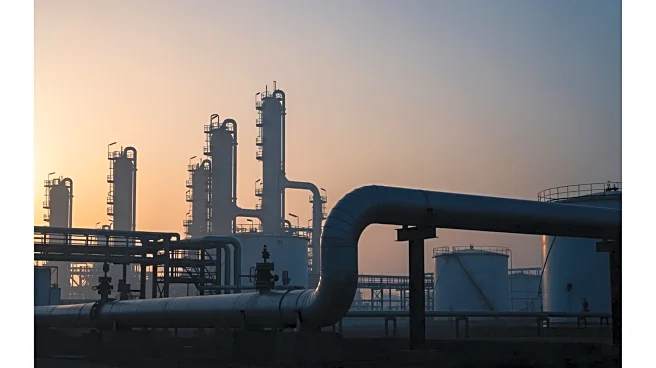
Venezuela has begun shutting down oil wells in the Orinoco Belt, which holds the world's largest oil deposits, due to a blockade imposed by the Trump administration. The state-run company, Petroleos de Venezuela SA (PDVSA), is reducing production by at least
25% to 500,000 barrels per day as storage capacity is maxed out. This decision marks a significant challenge for Venezuelan President Nicolas Maduro, who has been striving to maintain oil exports amidst U.S. sanctions. The operational and financial implications of restarting these wells are considerable, making this a last-resort measure.
Why It's Important?
The reduction in oil production is a critical development for Venezuela, a country heavily reliant on oil exports for economic stability. The U.S. blockade aims to exert financial pressure on the Maduro regime, potentially exacerbating the country's economic crisis. This move could lead to further economic instability in Venezuela, affecting global oil markets and international relations. For the U.S., it represents a strategic effort to influence political change in Venezuela, while for China, Venezuela's main oil buyer, it could mean disruptions in oil supply and increased geopolitical tensions.