



What's Happening?
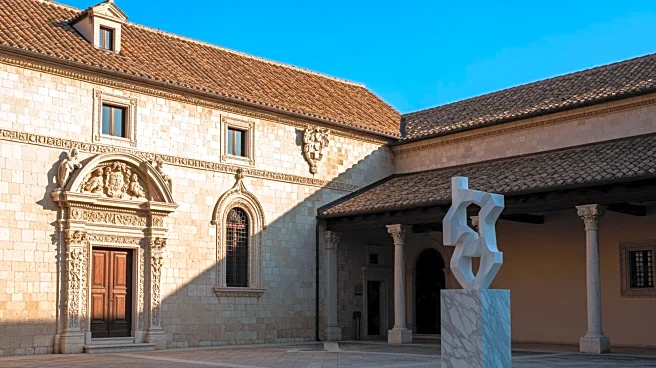
Hauser and Wirth, a prominent international art gallery, has announced the acquisition of the historic Palazzo Forcella De Sata in Palermo, Sicily. This move marks the gallery's continued expansion in the Mediterranean region. The acquisition was confirmed
by Iwan Wirth, the gallery's president and co-founder, who expressed the honor of restoring a site of significant cultural heritage. The palazzo, located in the ancient Arab quarter of Kalsa, has a rich history, having served as a venue for Manifesta 12 and as Palermo's first private art gallery in the 1930s. The building, which was put up for sale in 2020, is subject to historical monument restrictions, allowing Sicilian authorities and Italy's Ministry of Culture the option to preempt the sale. Hauser and Wirth plans to use the main floor as an exhibition space, although specific programming and renovation plans have not been disclosed.
Why It's Important?
The acquisition of Palazzo Forcella De Sata by Hauser and Wirth underscores the gallery's strategic expansion into culturally significant locations, enhancing its global footprint. This move is significant for the art world as it highlights the growing trend of major galleries investing in historic sites to create new cultural destinations. For Sicily, this development could boost local tourism and cultural engagement, potentially leading to economic benefits. The gallery's presence in Palermo may also attract international attention to the region's rich artistic heritage, fostering cultural exchange and collaboration. Additionally, the restoration of the palazzo aligns with broader efforts to preserve and repurpose historical sites, contributing to the conservation of cultural landmarks.
What's Next?
Following the acquisition, Hauser and Wirth will await the expiration of the right of refusal period, after which structural work on the palazzo could commence. The gallery aims to complete renovations by 2030, transforming the site into a vibrant arts destination. The art community and local stakeholders will likely monitor the gallery's plans for programming and exhibitions, which could influence the cultural landscape of Palermo. The involvement of Sicilian authorities and Italy's Ministry of Culture may also play a role in shaping the project's development, ensuring that the site's historical integrity is maintained.