
What's Happening?
The leaders of Mali, Burkina Faso, and Niger have announced plans to launch joint 'large-scale operations' against extremist groups in the Sahel region. This decision was made during a summit in Bamako,
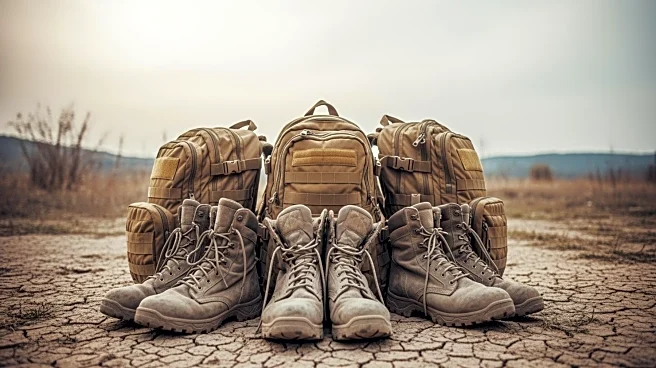
Mali, where Capt. Ibrahim Traoré of Burkina Faso was named the new head of the Alliance of Sahel States. The alliance, formed in 2023, consists of these three military-led countries that have recently withdrawn from West Africa's regional bloc. The Sahel region, south of the Sahara, is currently one of the most dangerous areas in the world due to the presence of armed groups linked to al Qaeda and the Islamic State. The countries have experienced coups and have been struggling with overstretched security forces. The alliance aims to strengthen security and economic ties, and a joint military battalion of 5,000 personnel has been launched to combat these armed groups.
Why It's Important?
The joint operations signify a significant shift in the security dynamics of the Sahel region. By forming this alliance, Mali, Burkina Faso, and Niger are taking a stand against external influences, having expelled traditional partners like France and the United States. Instead, they are turning to Russia for security support. This move could alter geopolitical alliances and affect international relations in the region. The success of these operations could stabilize the region, which has been plagued by violence, and improve the security situation for millions of residents. However, the complexity of the security crisis, with multiple armed groups operating in the area, poses a significant challenge.
What's Next?
The alliance's next steps involve executing the planned large-scale military operations. The effectiveness of these operations will be closely watched by international observers, as it could influence future security strategies in the region. The alliance's decision to deepen cooperation beyond military operations suggests potential economic and political collaborations. The international community, particularly countries with vested interests in the region, will likely monitor these developments closely, as they could impact regional stability and international security policies.
Beyond the Headlines
The alliance's decision to expel foreign military forces and turn to Russia highlights a broader trend of African nations seeking to assert their sovereignty and reduce dependency on Western powers. This shift could inspire other countries in the region to reconsider their foreign alliances. Additionally, the alliance's popularity among citizens suggests a growing sentiment for regional self-reliance and collaboration. The long-term implications could include a redefined balance of power in the Sahel and potentially across Africa.