
What's Happening?
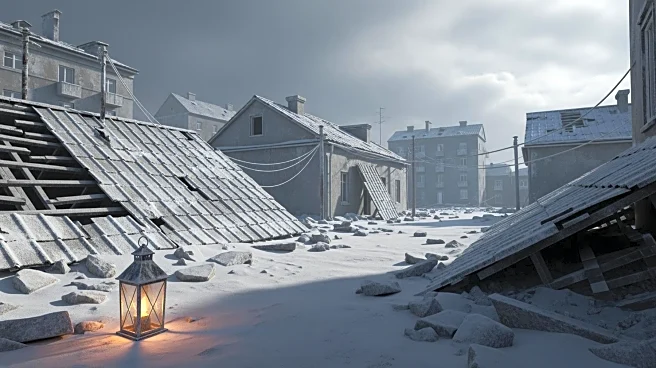
Gaza is experiencing severe winter weather, resulting in significant human and structural losses. Over the weekend, two people, including a child, died when a wall collapsed due to the harsh conditions.
The ongoing severe weather has led to the collapse of at least 49 buildings, with 20 fatalities reported as people sought shelter in unstable structures. Displaced Palestinians are struggling to survive in makeshift tents that are vulnerable to the elements. The United Nations Relief and Works Agency for Palestine Refugees (UNRWA) has highlighted the dire humanitarian situation, noting that aid supplies are insufficient to meet the needs of the affected population. The agency's Commissioner-General, Philippe Lazzarini, emphasized the compounded suffering due to the harsh weather and ongoing humanitarian challenges.
Why It's Important?
The severe weather in Gaza underscores the fragile living conditions and the urgent need for humanitarian assistance in the region. The destruction of homes and the loss of life highlight the vulnerability of displaced populations living in temporary shelters. The situation is exacerbated by the limited access to aid, which hampers relief efforts. This crisis not only affects the immediate safety and well-being of Gaza's residents but also poses broader implications for regional stability and international humanitarian efforts. The inability to provide adequate shelter and resources could lead to further displacement and suffering, emphasizing the need for international attention and intervention.
What's Next?
As the humanitarian crisis in Gaza continues, there is a pressing need for increased international aid and support. The upcoming visit of Israeli Prime Minister Benjamin Netanyahu to President Trump at Mar-a-Lago may present an opportunity for diplomatic discussions on the Gaza peace plan and potential relief efforts. The international community, including aid organizations and governments, may need to coordinate more effectively to ensure that necessary supplies reach those in need. The situation calls for urgent action to prevent further loss of life and to address the underlying issues contributing to the humanitarian crisis.
Beyond the Headlines
The ongoing crisis in Gaza highlights the complex interplay between natural disasters and human-made challenges, such as political conflict and inadequate infrastructure. The severe weather exacerbates existing vulnerabilities, illustrating the need for long-term solutions that address both immediate humanitarian needs and the root causes of instability. The situation also raises ethical questions about the responsibility of the international community to protect and assist vulnerable populations. As climate change continues to influence weather patterns, similar crises may become more frequent, necessitating proactive measures to build resilience and support sustainable development in affected regions.