


What's Happening?
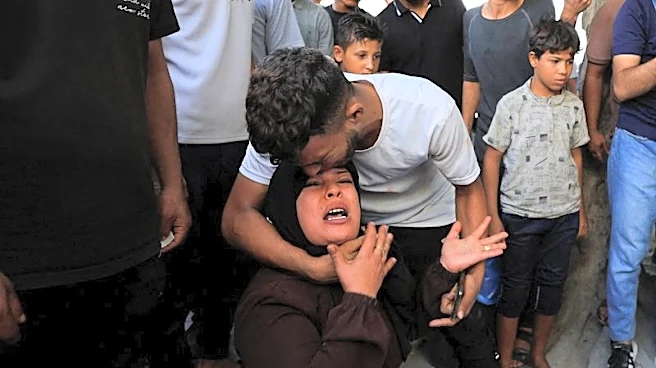
CNN is under scrutiny for its reporting on Gaza, specifically regarding its reliance on sources without providing adequate context about their potential affiliations. A recent report by CNN on the plight of Palestinians in Gaza, titled 'Buried bodies,
cleared rubble, Israel’s yellow line: How war is hampering the search for Gaza’s missing,' is cited as an example. The criticism centers on CNN's attribution of casualty figures to the 'Palestinian Ministry of Health' without specifying it as the Hamas-run Gaza Health Ministry. Similarly, Gaza’s Civil Defense estimates are quoted, and its spokesman, Mahmoud Basal, is presented without mentioning Israeli claims identifying him as a member of Hamas’ military wing. Furthermore, CNN is noted for citing Euro-Med Human Rights Monitor as a 'Geneva-based NGO' without detailing its controversial record, including alleged Hamas connections of its founder and chairman, Ramy Abdu, and former chairman Mazen Kahel, or its history of promoting unsubstantiated allegations against Israel. The report also mentions CNN's quotation of Israa Alqahwaji from Medical Aid for Palestinians (MAP) without acknowledging MAP's own controversial history, including past allegations of antisemitism and links to Hamas. The network also referenced a UN inquiry's finding of genocide in Gaza without providing context on the inquiry's extensive criticism regarding its commissioners' records and methodology.
Why It's Important?
This issue is important because it raises significant questions about journalistic integrity and the public's ability to form informed opinions on complex international conflicts. When major news outlets like CNN present information without crucial contextual details about their sources, it can inadvertently shape public perception and understanding of the conflict. The lack of transparency regarding the affiliations of organizations and individuals cited can lead to a skewed narrative, potentially undermining trust in media. For U.S. audiences, who often rely on such reporting to understand geopolitical events, this can impact their views on foreign policy, humanitarian aid, and the actions of involved parties. The implications extend to how policymakers and the public interpret events, potentially influencing decisions related to international relations and support for various groups. The debate over source credibility in conflict reporting highlights the critical role of media in shaping public discourse and the potential for misrepresentation when context is omitted.
What's Next?
The ongoing scrutiny of CNN's sourcing practices in Gaza coverage may lead to increased pressure on the network and other media organizations to enhance transparency and provide more comprehensive context for their sources, especially in conflict zones. Media watchdogs and advocacy groups are likely to continue highlighting instances where source affiliations or controversial histories are not adequately disclosed. This could prompt internal reviews within news organizations regarding their editorial guidelines for reporting on sensitive international conflicts. Audiences may become more discerning about the news they consume, seeking out multiple sources and demanding greater accountability from media outlets. The broader conversation about media bias and the challenges of reporting from territories controlled by non-state actors, such as Hamas, is expected to continue. This could also influence how international bodies and NGOs are perceived, depending on how their alleged affiliations are reported and whether news organizations choose to address these concerns more directly in their future coverage.
Beyond the Headlines
Beyond the immediate concerns of journalistic practice, this situation touches upon deeper issues of information warfare and the weaponization of narratives in conflict. In environments where access is restricted and information is tightly controlled, the line between legitimate reporting and propaganda can become blurred. The failure to provide full context for sources, particularly those with alleged ties to belligerent parties, can inadvertently serve the strategic interests of those parties by legitimizing their claims or obscuring their actions. This has profound ethical implications for journalism, as it challenges the profession's commitment to impartiality and truth. Furthermore, it highlights the vulnerability of public discourse to manipulation when critical information is withheld. The long-term impact could be a further erosion of public trust in mainstream media, leading to increased polarization and a greater reliance on less credible sources, thereby complicating efforts to achieve informed public consensus on critical global issues.