







What's Happening?
Utah Governor Spencer Cox has publicly thanked The Church of Jesus Christ of Latter-day Saints (LDS Church) for its $3 million donation aimed at protecting the Great Salt Lake. This significant contribution will be directed to the Office of the Great Salt Lake Commissioner
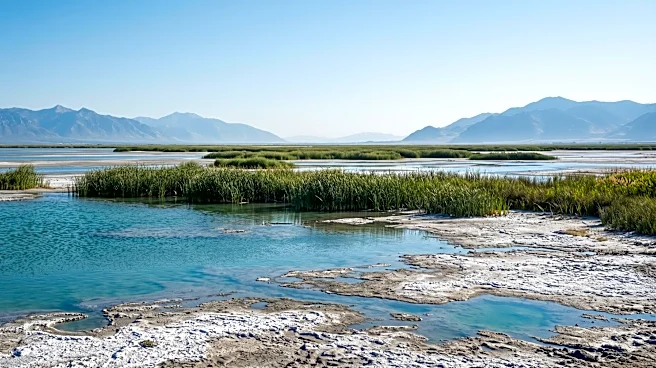
and managed by the Department of Natural Resources. The funds are specifically designated to combat the spread of phragmites, an aggressive, non-native reed that can grow up to 15 feet tall. Phragmites consume thousands of acre-feet of water annually, degrading the ecosystem, increasing wildfire risks, and preventing water from reaching the Great Salt Lake. The initiative seeks to restore migratory bird habitats, protect shoreline wetlands, and maintain natural water flow, underscoring the lake's critical role in Utah's environment, economy, and quality of life.
Why It's Important?
The Great Salt Lake is a vital ecological and economic asset for Utah, and its preservation is a top priority for state leadership. The invasive phragmites pose a severe threat by depleting water resources and disrupting the delicate balance of the lake's ecosystem. This $3 million donation from the LDS Church highlights a collaborative effort between religious institutions and state government to address pressing environmental challenges. The funding will support direct conservation actions, which are crucial for mitigating the environmental damage caused by the invasive plant. Successful eradication or control of phragmites will help conserve water, reduce wildfire hazards, and protect the habitats of migratory birds, thereby safeguarding the lake's long-term health and its contributions to Utah's economy and quality of life. This partnership sets a precedent for how diverse stakeholders can unite to tackle significant environmental issues.
What's Next?
The donated funds will be overseen by Great Salt Lake Commissioner Hannah Freeze and managed by the Department of Natural Resources. This structure suggests a coordinated and systematic approach to the conservation efforts. The immediate next steps will likely involve the deployment of resources to actively combat phragmites, including potential removal programs and strategies to prevent future spread. Continued monitoring of the lake's water levels and ecological health will be essential to assess the effectiveness of these interventions. This initiative may also encourage other private and public entities to contribute to the Great Salt Lake's preservation, potentially leading to broader conservation campaigns and increased public awareness regarding the lake's environmental challenges.
Beyond the Headlines
The collaboration between the LDS Church and the Utah state government on this environmental issue reflects a growing trend of inter-sectoral partnerships addressing complex societal and ecological problems. Beyond the immediate environmental benefits, this donation underscores the LDS Church's commitment to community welfare and environmental stewardship, potentially enhancing its public image and influence in conservation efforts. It also highlights the increasing recognition among diverse organizations that environmental health is intrinsically linked to economic stability and quality of life. This model of shared responsibility could inspire similar initiatives in other regions facing significant environmental threats, demonstrating how collective action can lead to more robust and sustainable solutions.